In partnership with


Most investors still think of cybersecurity as a defensive trade—something that rises during hacks, breaches, or panic cycles and fades when the news cools down. But that framing is breaking fast. As AI becomes embedded in every layer of enterprise software, cloud systems, and automated decision-making, cybersecurity is no longer sitting on the sidelines—it is becoming the operating layer that makes all of it possible. Every AI workflow depends on trust, identity verification, data integrity, and real-time threat detection, and that means security is no longer optional infrastructure. It is the foundation everything else is built on.
What if ChatGPT recommends your competitor first?

Over 2,500 businesses already show up in ChatGPT, Perplexity, and Google. AutoSEO writes expert articles and earns backlinks while they sleep. No SEO learning curve. No agency. Set it up once and let it run.

In this breakdown, we explore why cybersecurity is shifting from a reactive industry into a structural pillar of the AI economy. From Palo Alto Networks’ platform consolidation strategy to CrowdStrike’s expanding endpoint visibility and Datadog’s rise as an observability layer for AI-driven systems, each company is capturing a different part of the same underlying transformation. The key insight: AI is not reducing the need for cybersecurity—it is multiplying it. And as complexity grows, security stops being a defensive cost and starts becoming one of the most powerful and durable growth engines in the entire market.
Let’s embark on this transformative journey together and position your portfolio for success in this evolving market landscape!
Be sure to read through to the end to catch all the valuable insights this newsletter delivers to your inbox today.
What happens at 3:50 PM
3 PM hits. Volume picks up. By 3:50, the market's a freight train.
That's when my crew and I strike.
A few wins from recent sessions:
• $790 in pure profit
• 185% on a single position
• $1,500 winners closing the bell
We're not predicting tomorrow's headlines. We're not reading tea leaves. We're watching where $55 billion flows in the final hour — and riding it.
It happens today. And tomorrow. And every trading day after.
Tap here to join us. Your first week is free.
HXL's Steady Aerospace Climb: Advanced Materials Growth and Your $500 Monthly Plan
Picture this: Five years ago, Hexcel $HXL ( ▲ 0.37% ) stock traded around $61 per share. Today in June 2026, it closes at $97.71 — a solid +61% gain. The chart shows consistent movement with a clear upward trend in recent years, supported by demand for lightweight composite materials in aerospace and defense.
The 52-week high reached $99.49, showing the stock has already climbed close to even higher levels. Keeping it simple: The compound annual growth rate (CAGR) over these five years is about 10%. If this pace continues, it means reliable yearly gains that compound steadily over time.
Now imagine using dollar-cost averaging (DCA): adding $500 every month for the next five years. This totals $30,000 invested from your pocket over 60 months. You buy more shares on dips and fewer on rises, which helps keep your average cost balanced.

If HXL follows a similar historical pace around 10% annual growth, your monthly $500 contributions could grow your investment to approximately $39,000 by the end of five years. That means a gain of roughly $9,000 beyond what you put in — a solid 30% overall return from consistent investing.
Past performance doesn't guarantee the future — aerospace cycles, supply chain issues, or economic conditions can shift the path. But HXL is a leader in advanced composites with strong positions in commercial and military aircraft. Your $500 monthly plan stays simple and easy to maintain, letting compounding build steady value.
The long-term growth in air travel and defense spending keeps supporting this sector. Staying disciplined through any quieter periods is what usually leads to dependable results.
Ready to build with this kind of steady strength?
🛡️⚙️ Why Cybersecurity Is Becoming the Market’s Most Underrated Power Layer
For the investor trying to keep up with markets that never slow down, there’s a simple shift happening underneath the noise. AI is no longer a “sector play” in isolation. It has become the operating environment on which everything else runs.
That shift quietly turns cybersecurity from a defensive industry into foundational infrastructure. Without security, there is no trusted data, no reliable models, and no safe automation layer. Every AI workflow, from enterprise copilots to autonomous agents, depends on systems that can verify identity, protect data pipelines, and prevent intrusion at machine speed.
That’s why the past cycle of fear-driven selling in cybersecurity stocks did not hold. The assumption that AI would reduce demand for security tools is being replaced by the opposite reality: AI expands the attack surface faster than companies can secure it.
What matters now is not whether cybersecurity is relevant to AI—it is whether AI can function at all without it.
And that shift is already visible in market behavior. Stocks that were heavily sold off earlier in the year have rebounded sharply, with names across the sector moving in near synchronization.
The reason is not sentiment. It is structural demand.
Palo Alto Networks and the Platform Consolidation Era
Among the cybersecurity leaders, Palo Alto Networks $PANW ( ▲ 0.31% ) stands at the center of a broader consolidation trend.
The company is no longer operating as a single-product firewall vendor. Instead, it is executing a platform strategy that pulls multiple security layers into one ecosystem—network security, cloud protection, and endpoint defense integrated under a unified architecture.
This consolidation matters because enterprise buyers are no longer purchasing isolated tools. They are reducing vendor sprawl and shifting toward single-stack solutions that reduce complexity while improving detection speed across systems.
Recent financial performance reflects this transition. Revenue growth has been supported not only by new customer acquisition but also by expansion within existing accounts. That dual engine—new logos plus deeper penetration—has become the dominant driver across the sector.
What stands out in Palo Alto’s trajectory is not just growth, but durability. Even as the company offers incentives to accelerate platform adoption, it continues to maintain profitability and raise guidance, signaling that expansion is not coming at the expense of financial discipline.
In practical terms, Palo Alto is becoming less of a cyclical software company and more of a security utility embedded inside enterprise infrastructure.
For investors overwhelmed by constant volatility elsewhere in tech, this matters because it introduces something rare: predictable expansion inside a rapidly evolving threat landscape.
CrowdStrike and the Endpoint Reality of AI Expansion
If Palo Alto represents platform consolidation, CrowdStrike $CRWD ( ▲ 3.02% ) represents operational visibility at the endpoint layer.
Modern enterprises are no longer dealing with static systems. They are dealing with distributed environments—cloud workloads, remote devices, AI agents, and automated processes running across multiple environments simultaneously.
CrowdStrike’s model is built around that fragmentation. Its cloud-native architecture allows real-time monitoring of endpoints, identifying threats as they move across systems rather than after damage occurs.
This becomes significantly more important in an AI-driven world, where automated processes generate exponential increases in network traffic and system interactions. Every AI agent deployed inside a company becomes both a productivity tool and a potential vulnerability node.
One additional factor influencing short-term behavior in CrowdStrike is a stock split, which increases accessibility for retail participation but often introduces temporary volatility as pricing recalibrates.
However, the underlying structure remains consistent: endpoint security is becoming inseparable from enterprise AI deployment. As AI agents become embedded in workflows, visibility at the device level becomes non-negotiable.
The implication is straightforward. The more automation expands, the more endpoint intelligence becomes central—not optional.
Datadog and the Observability Layer Most Investors Underestimate
The third name in this cybersecurity structure is Datadog $DDOG ( ▲ 0.1% ), a company operating in what is often described as observability rather than traditional security.
Its role is different but equally critical. Instead of blocking threats, it monitors system behavior across cloud infrastructure, applications, and increasingly AI-driven workloads. It detects anomalies, performance degradation, and hidden inefficiencies before they escalate into system failures.
As companies deploy more AI agents and distributed computing systems, observability becomes essential. Systems are no longer manually traceable. They require continuous automated monitoring to ensure stability.
Datadog has also expanded beyond its original niche by introducing new products that push it closer to a full platform model. This shift transforms it from a monitoring add-on into a broader ecosystem layer within enterprise infrastructure.
Client concentration in large enterprises, including a significant portion of Fortune 500 companies, reinforces its position as embedded infrastructure rather than optional tooling.
The broader pattern across Palo Alto, CrowdStrike, and Datadog is consistent: cybersecurity is converging into platform-based ecosystems where expansion is driven by usage intensity rather than one-time purchases.
And that usage intensity is accelerating with AI adoption.
SpaceX is valued at $350B+ and hasn't filed yet. Three publicly traded companies already have direct revenue exposure to the listing. We've identified each one — get the free breakdown before the IPO window opens. Get it here.
The Market’s Real Signal: Consolidation, Not Saturation
Across cybersecurity, the most important misconception has been that rapid growth cycles would lead to saturation. The data suggests otherwise.
Instead of fragmentation slowing growth, the industry is undergoing consolidation into fewer, more comprehensive platforms. Companies are not competing solely on features anymore, but on ecosystem control.
That is why multiple cybersecurity stocks are moving in similar patterns. The sector is not behaving like isolated companies reacting to earnings cycles. It is behaving like a coordinated infrastructure layer responding to the same macro driver: AI expansion.
Another important signal comes from analyst expectations. Price targets across leading cybersecurity names are often already near current levels, suggesting that the recent rally has moved faster than consensus revisions. However, consensus itself has been trending upward, implying that the “fair value” of these companies is being recalibrated higher over time.
This creates a specific market condition: sideways consolidation with upward drift. Instead of explosive short-term gains, the sector is increasingly characterized by strong trends punctuated by consolidation phases that reset positioning.
For the overwhelmed investor trying to make sense of where opportunity still exists, the key takeaway is not timing individual breakouts. It is recognizing the structural demand curve underneath all three companies:
AI increases system complexity
Complexity increases attack surfaces
Attack surfaces increase cybersecurity demand
Demand expands platform consolidation
That cycle does not reset with quarterly earnings. It compounds.
And within that compounding structure, cybersecurity is not reacting to AI anymore.
It is becoming part of the infrastructure that makes AI usable at scale.
Ready to Revolutionize Your Wealth?
Here's what's waiting for you:
📈 Step-by-Step Guide: Start Investing in Minutes with Our Chosen Online Broker
🔍 Expert Insights: Uncover the Strategies Behind Our Recommended Smart Portfolios
💼 Easy Diversification: Gain Exposure to a Wide Range of Assets with Just a Few Clicks
💰 Long-Term Growth Potential: Build a Portfolio for Consistent Returns Over Time.

💸 Paying the bills
What if your money could drive itself to your goals?
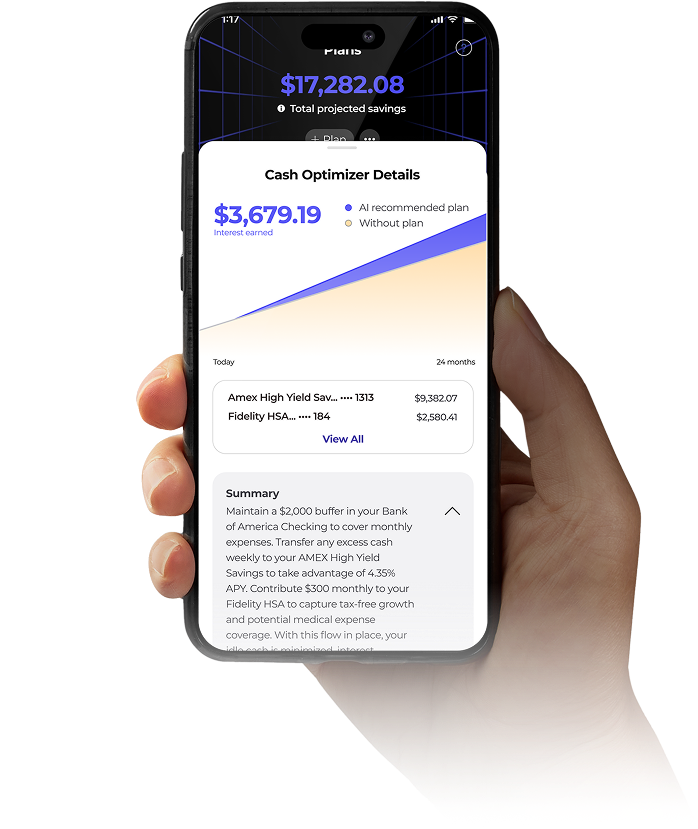
Any bank, any account, Piere makes it possible. In seconds, Piere analyzes your spending, income, wants, and goals, then creates fully automated plans for your money to follow.
- Save money automatically when you get paid — your money moves itself to the right account at the right interest rate
- Repay debt and stay debt free - Piere smartly determines which accounts to pay and when for the biggest impact
- Spend smarter — Piere keeps only the money you need for monthly expenses in your checking, moving the rest to high-yield accounts for safekeeping (and less temptation)
Get started in just seconds, and if you don't grow by at least $120 in your first year, we’ll give you back the difference.
Learn More
efind - Brain food is delivered daily. Every day, we analyze thousands of articles and send you only the best, tailored to your interests. Loved by 510,562 curious minds. Subscribe.

TOP MARKET NEWS
Top Market News - June 17, 2026
Historic Market Milestone Highlights Unusual Stock Market Conditions
Yahoo Finance reports a rare milestone not seen in over 155 years, reflecting extraordinary market conditions and long-term structural shifts in equities.
Tip: Extreme historical signals often reflect long cycles of liquidity, innovation, and investor behavior changes.
Why a Stock Market Crash May Not Be Imminent Despite Fears
Yahoo Finance UK explores arguments suggesting that despite elevated valuations and cautionary signals, a near-term crash may not necessarily follow.
Tip: Markets can remain irrational longer than expected, especially during liquidity-driven cycles.
AI IPO Boom Drives New Wave of Market Optimism and Volatility
The Guardian covers the surge in AI-related IPO activity, highlighting growing investor enthusiasm alongside concerns about valuation overheating.
Tip: IPO cycles tied to emerging technologies often amplify both upside momentum and downside risk.
What to Expect in the Stock Market Next Week: Key Drivers Ahead
Hargreaves Lansdown outlines upcoming catalysts including economic data releases, earnings expectations, and broader macro trends influencing investor sentiment.
Tip: Weekly outlook reports help investors position ahead of volatility and sector rotation.
Advertise with Investing Wise Academy
Elevate your financial brand with targeted exposure to savvy investors and market enthusiasts. Join us early for premium discounts and a compelling story that lands in the right inboxes. Let’s grow together!
Partner with Us
PROMO CONTENT
Can email newsletters make money?
As the world becomes increasingly digital, this question will be on the minds of millions seeking new income streams in 2026.
The answer is—Absolutely!

That’s it for this episode!
Thank you for taking the time to read today’s email! Your support is what allows me to send out this newsletter for free every day.
What do you think of the new format? Please provide your feedback in the poll below, and if you find the newsletter valuable, feel free to share it with other investors!
How would you rate today's newsletter?
Disclaimer: This newsletter is for informational purposes only and should not be considered financial advice. Please consult with a financial advisor before making any investment decisions.