In partnership with


Market pullbacks in industry leaders often generate the loudest headlines—and the biggest doubts. As Meta and Microsoft face renewed scrutiny over massive artificial intelligence spending, many investors are questioning whether rising capital expenditures and softer free cash flow signal weakening businesses or simply the cost of securing future growth. While markets tend to focus on quarterly financial pressure, long-term investors may find that temporary pessimism is creating opportunities to evaluate whether these companies are becoming more valuable, not less.
Speak the email. Send the email.

Talk through your reply and get polished, professional text ready to paste. Wispr Flow strips filler, fixes grammar, and formats everything. 89% sent with zero edits. Works everywhere.

In this breakdown, we explore why AI infrastructure spending should be viewed through the lens of long-term competitive positioning rather than short-term financial metrics. We examine how Meta is strengthening its advertising ecosystem through AI, how Microsoft is embedding artificial intelligence across its cloud and productivity platforms, and why temporary valuation pressure has historically created attractive entry points for exceptional businesses. The key takeaway is that the market often discounts rising investment costs today while underestimating the durable competitive advantages those investments can create tomorrow.
Let’s embark on this transformative journey together and position your portfolio for success in this evolving market landscape!
Be sure to read through to the end to catch all the valuable insights this newsletter delivers to your inbox today.
How to collect $1,170 a month from silver
Hi, Tim Plaehn here.
Silver just shattered prices records last year.
And I've found a way to play this surge....
It's a simple silver fund that's been quietly delivering up to 20% in yearly distributions… Paid monthly.
That means while others wait for silver to go higher…
You could already be collecting $1,170 a month.
The next payout is just days away.
To your income,
Tim Plaehn
Lead Income Strategist
Click here to discover how this silver income fund works.
Information contained in this email and websites maintained by Magnifi Communities LLC (dba Investors Alley) are for educational purposes only and are neither an offer nor a recommendation to buy or sell any security.
Past performance is not necessarily indicative of future results. Trading and investing involve risk, and you may lose your principal investment.
All information contained herein is copyright 2025, Magnifi Communities LLC.
DTCR's Steady Data Center Climb: Digital Infrastructure Growth and Your $500 Monthly Plan
Picture this: Five years ago, $DTCR ( ▼ 1.8% ) traded around $17.25 per share. Today in June 2026, it closes at $30.68 — a solid +78% gain. The chart shows a gradual upward trend with some normal pullbacks, reflecting growth in data centers and digital infrastructure.
The 52-week high reached $32.79, showing the ETF has tested higher levels during stronger periods. Keeping it simple: The compound annual growth rate (CAGR) over these five years is about 12%. If this pace continues, it means reliable yearly gains that compound steadily over time.
Now imagine using dollar-cost averaging (DCA): adding $500 every month for the next five years. This totals $30,000 invested from your pocket over 60 months. You buy more shares on dips and fewer on rises, which helps keep your average cost balanced.

If DTCR follows a similar historical pace around 12% annual growth, your monthly $500 contributions could grow your investment to approximately $43,000 by the end of five years. That means a gain of roughly $13,000 beyond what you put in — a solid 43% overall return from consistent investing.
Past performance doesn't guarantee the future — technology spending, interest rates, or market conditions can shift the path. But DTCR offers exposure to data centers and digital infrastructure, which continue to benefit from rising AI and cloud demand. Your $500 monthly plan stays simple and easy to maintain, letting compounding build steady value.
The growing need for data centers keeps creating long-term opportunities in this sector. Staying disciplined through any quieter periods is what usually leads to good results.
Ready to build with this kind of steady tech infrastructure potential?
🏛️💰 When Great Companies Go on Sale: Looking Beyond the AI Spending Headlines
There is something unsettling about watching two of the world's strongest companies lose momentum at the same time. When Meta Platforms (META) and Microsoft (MSFT) begin sliding lower, the headlines usually arrive with dramatic explanations. Investors hear concerns about excessive artificial intelligence spending, shrinking free cash flow, or slowing growth. Before long, the narrative becomes simple: the market believes these companies have become too expensive or too risky.
But investing has never been about following the loudest narrative. More often than not, the greatest opportunities appear when the market becomes overly focused on what is happening over the next quarter instead of the next decade.
If building long-term wealth is the objective—not simply reacting to every market headline—then moments like these deserve closer attention rather than immediate concern. Temporary weakness in exceptional businesses often says more about market psychology than it does about the businesses themselves.
The question is no longer whether Meta and Microsoft are spending aggressively on artificial intelligence. They clearly are. The more important question is whether those investments are strengthening or weakening their competitive positions over time.
That distinction makes all the difference.
AI spending is not the same as value destruction
One of the biggest misconceptions surrounding today's technology leaders is the assumption that rising capital expenditures automatically reduce shareholder value.
At first glance, that concern seems reasonable.
Billions of dollars are being allocated toward new data centers, specialized AI processors, networking equipment, and cloud infrastructure. Those investments naturally reduce free cash flow in the short term, making financial metrics appear weaker than they might have otherwise.
However, not every expense should be viewed as a cost.
Some expenses are actually investments designed to generate future cash flows.
This is exactly where Meta and Microsoft differ from many companies attempting to enter the AI race.
Neither company is spending simply to keep up.
They are spending to widen competitive advantages that already exist.
Artificial intelligence infrastructure is quickly becoming the foundation upon which future digital services will operate. Companies that own the infrastructure today are far more likely to capture tomorrow's profits than those forced to rent or license those capabilities later.
Seen from that perspective, today's capital expenditures resemble long-term strategic investments rather than temporary financial burdens.
Meta's business remains stronger than many realize
For years, Meta Platforms $META ( ▼ 4.8% ) has been viewed primarily as a social media company.
That description no longer captures the full picture.
Its advertising ecosystem remains one of the most efficient digital marketing platforms in the world, connecting billions of users across Facebook, Instagram, WhatsApp, and Messenger. Artificial intelligence is making that ecosystem even more effective.
AI-powered recommendation systems improve user engagement.
Smarter advertising algorithms help businesses reach customers more efficiently.
Automated content creation reduces operating costs while improving advertiser results.
Each improvement reinforces the strength of the platform, making it increasingly valuable for both businesses and users.
Despite enormous investments into AI infrastructure, Meta continues generating extraordinary operating cash flow. Its core advertising business remains highly profitable, allowing the company to fund ambitious AI expansion without compromising financial stability.
Rather than weakening the business, artificial intelligence is becoming another layer that strengthens an already dominant ecosystem.
That combination of scale, profitability, and innovation is difficult for competitors to replicate.
Microsoft continues building an AI ecosystem, not a single product
While much of the attention surrounding Microsoft $MSFT ( ▼ 1.35% ) focuses on its partnership with OpenAI, the company's long-term opportunity extends far beyond a single investment.
Artificial intelligence is gradually being integrated throughout Microsoft's entire business.
Azure continues serving as one of the world's leading cloud platforms, providing the infrastructure businesses need to deploy AI applications.
Microsoft 365 increasingly incorporates AI-powered productivity tools that enhance workplace efficiency.
GitHub Copilot continues demonstrating how artificial intelligence can transform software development.
Meanwhile, enterprise customers remain deeply embedded within Microsoft's broader ecosystem, creating high switching costs that reinforce customer loyalty.
This is an important distinction. Microsoft is not relying on one breakthrough product to justify its AI spending. Instead, it is enhancing nearly every major business segment simultaneously.
That diversified strategy provides multiple avenues for monetization while reducing dependence on any single product or market.
Although cloud growth occasionally fluctuates from quarter to quarter, those short-term variations rarely change Microsoft's long-term competitive position.
The company continues building an ecosystem that becomes increasingly valuable as artificial intelligence adoption expands across industries.
Short-term valuation doesn't always reflect long-term value
Markets have a tendency to reward certainty and punish uncertainty.
Today, uncertainty revolves around one question: when will massive AI investments begin producing measurable financial returns? Until that answer becomes clearer, valuation multiples may remain under pressure. Yet history repeatedly demonstrates that many of the market's greatest compounders experienced similar periods.
There were times when investors questioned Alphabet (GOOGL) because of rising infrastructure investments.
There were periods when cloud spending caused concern across the technology sector.
Those moments eventually faded as earnings growth caught up with investment cycles.
Today's environment appears remarkably similar.
Temporary compression in valuation often occurs long before business fundamentals actually weaken.
For patient investors, that difference creates opportunity.
Buying outstanding companies while sentiment remains cautious has historically produced stronger long-term outcomes than chasing stocks after optimism has already returned.
You Already Have a Take on What AI Does Next

OpenAI or Anthropic? Which model leads the next benchmark? Which company ships the next major breakthrough?
If you follow AI closely, you already have opinions on where the industry is headed. Kalshi lets you trade on real-world AI and technology events, with markets that move as models launch, benchmarks drop, and announcements happen.
The people who follow this space most closely often see the story developing before everyone else. Put that knowledge to work and trade what you think happens next.
Bonus credit varies from $15 to $500. Terms apply.
Looking beyond market sentiment
One of the easiest mistakes investors make is allowing market sentiment to dictate investment decisions.
Prices decline. Confidence disappears. Negative headlines multiply. The assumption becomes that something must be fundamentally wrong. Yet business performance often tells a different story.
Both Meta and Microsoft continue producing significant revenues, maintaining healthy operating margins, and investing aggressively in technologies expected to define the next generation of digital services.
Their competitive positions remain among the strongest in the global technology industry.
Their customer ecosystems continue expanding.
Their balance sheets remain exceptionally resilient.
Those characteristics matter far more over the next decade than temporary fluctuations in quarterly free cash flow.
While no investment is without risk, distinguishing between deteriorating businesses and temporarily unpopular businesses is one of the most valuable skills any investor can develop.
AI infrastructure is becoming the new competitive moat
Artificial intelligence has changed the economics of technology.
Owning world-class computing infrastructure increasingly resembles owning critical industrial infrastructure during previous economic revolutions.
The companies capable of investing tens of billions of dollars annually into AI development are creating barriers that very few competitors can realistically overcome.
That is precisely why Meta and Microsoft continue allocating enormous resources toward expanding data centers, acquiring advanced GPUs, and improving AI capabilities.
The upfront costs may appear intimidating today.
However, those same investments could become the foundation supporting future revenue growth, stronger operating leverage, and greater pricing power.
Viewed through that lens, today's capital expenditures represent the cost of securing tomorrow's leadership.
Investors willing to look beyond the next earnings report may recognize that these investments are not temporary obstacles to shareholder returns—they may become the very reason those returns remain strong for years to come.
The market rewards patience more than prediction
Trying to predict every market movement is rarely a winning strategy.
The market can remain emotional far longer than fundamentals suggest.
Prices can move lower despite improving businesses.
Headlines can create uncertainty even when long-term opportunities remain intact.
For investors focused on building wealth steadily over time, those periods often provide the best opportunity to evaluate existing holdings with greater clarity.
Rather than asking whether a stock has fallen too far, the better question is whether the business itself has changed.
For Meta and Microsoft, the answer appears remarkably consistent.
Both companies continue generating enormous cash flows.
Both remain leaders in industries with significant long-term growth potential.
Both are investing heavily to strengthen competitive advantages rather than simply maintain them.
Markets will eventually move beyond today's concerns surrounding AI spending.
When they do, attention is likely to shift back toward the qualities that have always defined exceptional businesses: durable earnings, expanding cash flows, and the ability to create value year after year.
Sometimes the best opportunities do not appear when everything looks perfect.
Sometimes they emerge precisely when outstanding companies are temporarily misunderstood.
Ready to Revolutionize Your Wealth?
Here's what's waiting for you:
📈 Step-by-Step Guide: Start Investing in Minutes with Our Chosen Online Broker
🔍 Expert Insights: Uncover the Strategies Behind Our Recommended Smart Portfolios
💼 Easy Diversification: Gain Exposure to a Wide Range of Assets with Just a Few Clicks
💰 Long-Term Growth Potential: Build a Portfolio for Consistent Returns Over Time.

💸 Paying the bills
What if your money could drive itself to your goals?
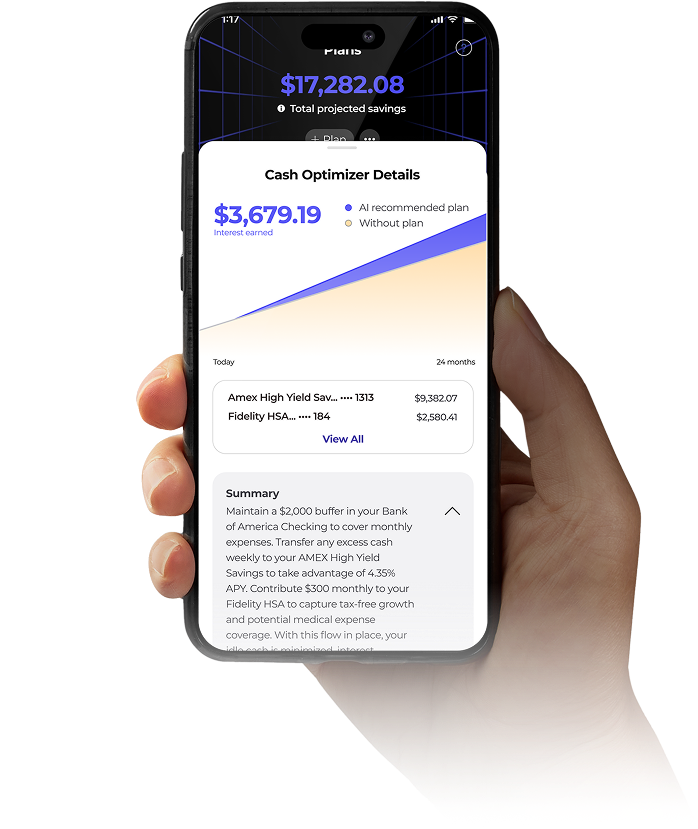
Any bank, any account, Piere makes it possible. In seconds, Piere analyzes your spending, income, wants, and goals, then creates fully automated plans for your money to follow.
- Save money automatically when you get paid — your money moves itself to the right account at the right interest rate
- Repay debt and stay debt free - Piere smartly determines which accounts to pay and when for the biggest impact
- Spend smarter — Piere keeps only the money you need for monthly expenses in your checking, moving the rest to high-yield accounts for safekeeping (and less temptation)
Get started in just seconds, and if you don't grow by at least $120 in your first year, we’ll give you back the difference.
Learn More
efind - Brain food is delivered daily. Every day, we analyze thousands of articles and send you only the best, tailored to your interests. Loved by 510,562 curious minds. Subscribe.

TOP MARKET NEWS
Top Market News - June 30, 2026
Target-Date Funds Simplify Long-Term Retirement Investing
Target-date funds automatically adjust asset allocations over time, providing investors with a hands-off approach to retirement planning and portfolio management.
ETF Portfolio Ideas for Building Retirement Wealth
Retirement-focused ETF portfolios continue to gain popularity as investors seek diversified, low-cost solutions for long-term wealth accumulation.
Popular Retirement ETF Raises Diversification Questions
Investors are encouraged to evaluate whether widely held retirement ETFs provide sufficient diversification across sectors and market conditions.
Covered Call ETFs Offer Income Opportunities for Retirees
Covered call ETFs such as XYLD and RYLD continue to attract retirees seeking enhanced income while balancing portfolio risk and cash flow needs.
Advertise with Investing Wise Academy
Elevate your financial brand with targeted exposure to savvy investors and market enthusiasts.
Partner with Us
PROMO CONTENT
Can email newsletters make money?
As the world becomes increasingly digital, this question will be on the minds of millions seeking new income streams in 2026.
The answer is—Absolutely!

That’s it for this episode!
Thank you for taking the time to read today’s email! Your support is what allows me to send out this newsletter for free every day.
What do you think of the new format? Please provide your feedback in the poll below, and if you find the newsletter valuable, feel free to share it with other investors!
How would you rate today's newsletter?
Disclaimer: This newsletter is for informational purposes only and should not be considered financial advice. Please consult with a financial advisor before making any investment decisions.