Sponsored by


The IPO market is entering a structural shift where the most important price discovery no longer happens at the moment of listing, but across the extended liquidity cycle that surrounds it. With highly anticipated companies like SpaceX already demonstrating how limited float, staged unlocks, and overwhelming demand can distort early pricing, investors are beginning to see IPOs less as single events and more as multi-phase capital rotations. As Anthropic and OpenAI move closer to public markets, this dynamic is expected to intensify, turning IPOs into extended liquidity systems where scarcity, narrative demand, and capital rotation matter more than initial valuations.
Manufacturing Legend Backs Greenfield Robotics

Howard Dahl spent decades building the machines that feed America. His family invented the Bobcat skid steer. The air drills planting nearly every commodity crop globally? Those too. Now Dahl is manufacturing weed-cutting robots for Greenfield Robotics out of his Fargo factory, and he wrote his own check on top of it.
Greenfield's current fleet is sold out, with over $1 million in total revenue and robots in the field since 2020. Chipotle’s venture arm and KingsCrowd Capital are also on board. The robots slice weeds with centimeter precision, replacing herbicides linked to environmental damage and rising health concerns among farmers.
Greenfield is now in Test the Waters under Reg A+. Reserving shares today locks in a 5% bonus that can grow to 20% the week the round opens to the public.
Greenfield Robotics is Testing The Waters under tier 2 of Regulation A. No money or other consideration is being solicited, and if sent in response will not be accepted. No offer to buy the securities can be accepted and no part of the purchase price can be received until the offering statement filed by the company with the SEC has been qualified by the SEC. Any such offer may be withdrawn or revoked, without obligation or commitment of any kind, at any time before notice of acceptance given after the date of qualification. An indication of interest involves no obligation or commitment of any kind. “Reserving” shares is simply an indication of interest. There is no binding commitment for investors that reserve shares in this manner to ultimately invest and purchase the shares reserved of the company, or to purchase any shares of the company whatsoever.

In this breakdown, we examine how modern IPOs are shaped by structural scarcity, unlock-driven volatility, and cross-sector capital flows that extend far beyond the headline company. From SpaceX’s early trading behavior to the expected listings of Anthropic and OpenAI, we explore how liquidity cycles now influence not just pricing, but entire sectors of technology and infrastructure. The key takeaway is that IPOs are no longer isolated events—they are coordinated capital redistribution mechanisms where the biggest opportunities often emerge in the layers surrounding the main listing.
Let’s embark on this transformative journey together and position your portfolio for success in this evolving market landscape!
Be sure to read through to the end to catch all the valuable insights this newsletter delivers to your inbox today.
What if your money could drive itself to your goals?
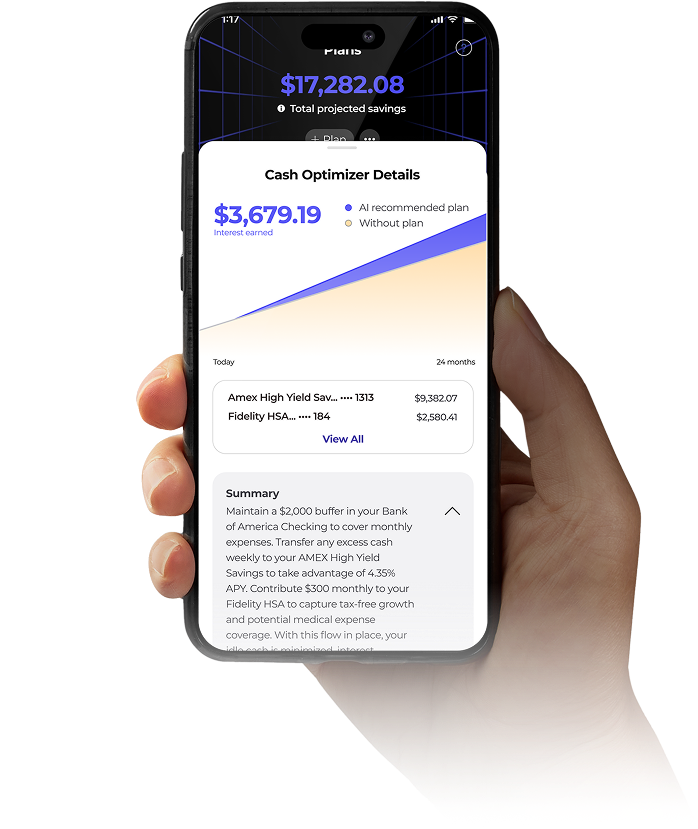
Any bank, any account, Piere makes it possible. In seconds, Piere analyzes your spending, income, wants, and goals, then creates fully automated plans for your money to follow.
- Save money automatically when you get paid — your money moves itself to the right account at the right interest rate
- Repay debt and stay debt free - Piere smartly determines which accounts to pay and when for the biggest impact
- Spend smarter — Piere keeps only the money you need for monthly expenses in your checking, moving the rest to high-yield accounts for safekeeping (and less temptation)
Get started in just seconds, and if you don't grow by at least $120 in your first year, we’ll give you back the difference.
Learn More
XLE's Steady Energy Path: Sector Strength and Your $500 Monthly Plan
Picture this: Five years ago, the $XLE ( ▼ 1.09% ) energy sector ETF traded around $27.67 per share. Today in June 2026, it closes at $53.77 — a solid +94% gain. The chart shows a consistent upward trend with some normal pullbacks, supported by oil and gas company performance.
The 52-week high reached $63.46, showing the ETF has already climbed higher during strong periods. Keeping it simple: The compound annual growth rate (CAGR) over these five years is about 14.2%. If this pace continues, it means reliable yearly gains that compound steadily over time.
Now imagine using dollar-cost averaging (DCA): adding $500 every month for the next five years. This totals $30,000 invested from your pocket over 60 months. You buy more shares on dips and fewer on rises, which helps keep your average cost balanced.
If XLE follows a similar historical pace around 14.2% annual growth, your monthly $500 contributions could grow your investment to approximately $43,000 by the end of five years. That means a gain of roughly $13,000 beyond what you put in — a solid 43% overall return from consistent investing.

Past performance doesn't guarantee the future — energy prices or market conditions can shift the path. But XLE gives broad exposure to leading energy companies with strong fundamentals. Your $500 monthly plan stays simple and easy to maintain, letting compounding build steady value.
The ongoing global need for energy keeps supporting this sector. Staying disciplined through any temporary pullbacks is what usually leads to good long-term results.
Ready to build with this kind of balanced energy potential?
🚀💰 The IPO Avalanche: SpaceX, Anthropic, OpenAI and the Hidden Money Flow Behind Them
The market is entering a phase where the biggest wealth moves are no longer happening after companies go public, but during the positioning phase that surrounds the IPO cycle itself. Recent trading activity around SpaceX $SPCX ( ▲ 1.89% ) has already demonstrated how distorted early price discovery becomes when demand is structurally higher than available supply.
With only a small portion of shares initially available to trade, early pricing becomes less about fundamentals and more about scarcity mechanics. This is not a temporary anomaly; it is a structural feature of modern large-scale IPOs where insider holdings, lock-up schedules, and staged liquidity releases shape the entire price curve.
The same structural conditions are forming around the upcoming public debuts of Anthropic $ANTHZZX ( ▼ 0.62% ) and OpenAI $OPEAZZX ( ▲ 0.32% ). These are not ordinary IPOs. They represent frontier AI infrastructure entering public markets under constrained float conditions and overwhelming institutional attention.
For investors trying to stay grounded, the key shift is this: IPOs now function as multi-stage liquidity events rather than single-day listings. Understanding that shift matters more than predicting initial pricing.
SpaceX set the template: scarcity, unlocks, and volatility waves
The early trading behavior of SpaceX has become a reference model for how high-demand listings behave under restricted supply conditions.
Initial momentum is driven by scarcity. However, that momentum does not move in a straight line. It evolves through unlock cycles, where previously restricted shares gradually enter circulation. These unlocks introduce intermittent supply shocks that can temporarily interrupt upward price trends.
This does not reflect weakening fundamentals. Instead, it reflects natural liquidity expansion as long-term employees and early stakeholders begin monetizing equity that has been illiquid for years.
SpaceX itself sits at the center of multiple long-duration economic themes, including satellite communications, orbital infrastructure, and advanced aerospace systems. However, the near-term trading behavior is less about those end markets and more about how capital reacts to staged liquidity.
The important takeaway is not directional price prediction. It is recognizing that volatility is embedded in the structure of post-IPO share release cycles.
The real trade is not the IPO: it is the infrastructure behind it
In major IPO cycles, the most consistent long-term value creation often appears outside the headline company itself. Capital deployment tends to spread across supporting industries that scale alongside the primary demand driver.
As SpaceX-related capital expands, it creates downstream demand for industrial and technological infrastructure including advanced materials, communication systems, and manufacturing capabilities.
This pattern is not unique. It closely resembles the artificial intelligence buildout led by Microsoft, Alphabet, and Amazon, where capital expenditures did not remain confined to software but expanded into semiconductors, energy systems, and data infrastructure.
The key structural insight is that infrastructure demand tends to diversify returns across the supply chain. While flagship companies capture narrative attention, suppliers often experience earlier revenue acceleration because they are exposed to broad-based purchasing rather than single-customer dependency.
For investors managing complexity, this reduces the importance of precise IPO timing and increases the importance of understanding capital flow direction.
$90 Trillion in Offshore Perps. Now They're in the US.

Traders have been going long and short on crypto for years — offshore, unregulated. Kalshi fixed that. First CFTC-regulated perps in the US. BTC, ETH, SOL, XRP, and more. Up to 5.8x leverage.
Using leverage increases risk of loss. Leverage is subject to the Firm's review and the customer's risk profile.
Anthropic and OpenAI: the AI IPO domino effect
The upcoming IPOs of Anthropic and OpenAI represent the next major liquidity events in the artificial intelligence cycle.
These companies operate at the frontier of AI model development, meaning their impact is not limited to a single product category but extends across enterprise software, cloud infrastructure, and automation ecosystems.
A key dynamic surrounding these IPOs is capital rotation. When large, highly anticipated listings approach, capital often shifts away from indirect exposure and concentrates into direct ownership of the newly listed asset. This creates temporary distortions across adjacent sectors.
This rotation can influence:
Large-cap technology exposure through firms like Microsoft and Amazon
Enterprise software ecosystems competing with AI-native systems
Cloud infrastructure providers tied to model deployment demand
The critical insight is that liquidity is finite in the short term. Major IPO events do not expand available capital immediately; they redistribute it.
The strategic positioning layer for busy investors
For investors with limited time, the challenge is not identifying opportunity but prioritizing exposure without overcomplicating execution.
Across SpaceX, Anthropic, and OpenAI, three structural forces dominate:
First, scarcity-driven pricing dynamics.
Early trading phases are defined by limited float and elevated demand, which creates rapid repricing environments.
Second, infrastructure-led capital expansion.
The largest beneficiaries of these cycles often sit in the supply chain rather than the headline asset.
Third, liquidity rotation across sectors.
Capital moves between crypto, big tech, and pre-IPO exposure vehicles depending on narrative intensity and perceived opportunity.
Within this environment, companies like Microsoft, Alphabet, and Amazon continue to act as structural liquidity anchors. However, they also become temporary funding sources during major IPO cycles.
The key mindset shift is moving from entry-point thinking to flow-based thinking. The most important question is not where price enters, but where capital moves next.
The current IPO cycle is not a single opportunity. It is a layered redistribution of capital across emerging technological infrastructure systems.
Understanding that structure allows investors to reduce noise and focus on flow, which is where the real signal sits in volatile markets.
Ready to Revolutionize Your Wealth?
Here's what's waiting for you:
📈 Step-by-Step Guide: Start Investing in Minutes with Our Chosen Online Broker
🔍 Expert Insights: Uncover the Strategies Behind Our Recommended Smart Portfolios
💼 Easy Diversification: Gain Exposure to a Wide Range of Assets with Just a Few Clicks
💰 Long-Term Growth Potential: Build a Portfolio for Consistent Returns Over Time.

💸 Paying the bills
Explore Degree Programs Tailored to You

At Education Directory, we understand that choosing the right degree program is a crucial step toward your future success. Our platform offers personalized assistance to help you discover programs that match your interests and career objectives.
How it works:
Step 1: Explore Areas of Study
Expand your skills or start something new, discover colleges by subject areas that matter to you.
Step 2: Refine Your Search
Narrow down your college search based on your desired interests
Step 3: Compare Institutions
Compare top schools and decide which institutions best fit your need
Get Started
This is an offer for educational opportunities and not an offer for nor a guarantee of employment. Students should consult with a representative from the school they select to learn more about career opportunities in that field. Program outcomes vary according to each institution’s specific program curriculum.
efind - Brain food is delivered daily. Every day, we analyze thousands of articles and send you only the best, tailored to your interests. Loved by 510,562 curious minds. Subscribe.

TOP MARKET NEWS
Top Market News - June 24, 2026
Long-Term Wealth Stocks That Could Repeat Their Outperformance
Certain historically strong equities have created substantial long-term wealth and may continue compounding for patient investors.
Stocks Linked to High-Profile Political Portfolios Draw Investor Attention
Investor interest grows around stocks associated with high-profile political figures and their disclosed holdings and influence.
Understanding Key Types of Investment Risk
Market participants revisit fundamental risk categories including market, credit, and liquidity risk as part of portfolio planning.
Airline Stocks Face Near-Term Headwinds Amid Fundamentals Focus
U.S. airline equities come under pressure as investors shift attention toward earnings fundamentals and demand outlooks.
Advertise with Investing Wise Academy
Elevate your financial brand with targeted exposure to savvy investors and market enthusiasts.
Partner with Us
PROMO CONTENT
Can email newsletters make money?
As the world becomes increasingly digital, this question will be on the minds of millions seeking new income streams in 2026.
The answer is—Absolutely!

That’s it for this episode!
Thank you for taking the time to read today’s email! Your support is what allows me to send out this newsletter for free every day.
What do you think of the new format? Please provide your feedback in the poll below, and if you find the newsletter valuable, feel free to share it with other investors!
How would you rate today's newsletter?
Disclaimer: This newsletter is for informational purposes only and should not be considered financial advice. Please consult with a financial advisor before making any investment decisions.