In partnership with


The FXAIX vs VOO debate is often treated like a meaningful strategic decision, but in reality it’s closer to comparing two different doors that open into the same room. Both track the S&P 500, both hold the same dominant U.S. companies, and both are engineered to mirror the same underlying index performance. Any perceived differences in returns tend to fade over time, leaving outcomes that are nearly indistinguishable once compounding has played out over several years. What this really reveals is that investors often focus on the wrong layer of the decision—optimizing the wrapper instead of understanding the engine beneath it.
The deeper truth is that long-term wealth creation has almost nothing to do with choosing between FXAIX and VOO, and everything to do with behavior over time. Staying invested, continuing to contribute, and resisting the urge to interrupt compounding matters far more than marginal differences in fees or structure. Once that is understood, the entire debate shifts: it is no longer about which fund performs better, but about whether the investor can remain consistent long enough for the S&P 500 itself to do the heavy lifting.
They’re Already Leading a Market Poised for 3X Growth

By 2033, the restaurant robotics market is projected to triple in size. And Automated Retail Technologies has been front and center since 2021.
ART’s robotic restaurant kiosks change how brands serve their customers entirely. Instead of a brick-and-mortar location, ART lets them reach new markets at just 0.001% of the cost.
To date, ART has 800+ kiosks deployed across big-name partners like White Castle, Nestlé, Aramark, Sodexo, Compass Group, and more. And White Castle alone just signed on for 1,000 more units.
But the opportunity ahead is even bigger. ART has identified 340,000+ more potential locations that could be candidates for one of their kiosks.
Leading investors like Shark Tank’s Kevin Harrington have already joined. Become an ART investor alongside him today to unlock up to 10% in bonus stock.
This is a paid advertisement for Automated Retail Technologies Regulation CF offering. Please read the offering circular at https://invest.automatedrt.com/

In the full breakdown, we unpack why the FXAIX vs VOO debate ultimately misses the real point entirely—because both funds are effectively the same S&P 500 engine packaged differently. Beyond the near-identical returns and structural overlap, the real story is how investor behavior, not fund selection, drives long-term outcomes. What looks like a choice between two ETFs is actually a lesson in compounding, consistency, and time in the market—and why those forces matter far more than any wrapper ever could.
Let’s embark on this transformative journey together and position your portfolio for success in this evolving market landscape!
Be sure to read through to the end to catch all the valuable insights this newsletter delivers to your inbox today.
Follow the $50 Billion Buy-In
Wall Street just bet billions on a small collection of stocks… And it looks like they’re about to bet even more.
Our analysts have tracked the rotation and identified 10 companies getting heavy accumulation from the big money.
Our 10 Best Stocks to Own in 2026 report lays out the tickers, the trends, and why these names are attracting fresh capital right now.
Don’t wait until the headlines hit.
Send My Free Report
RDW's Strong Space Surge: Satellite Momentum and Your $500 Monthly Plan
Picture this: Five years ago, Redwire $RDW ( ▼ 5.84% ) stock traded around $10 per share. Today in June 2026, it closes at $24.57 — a solid +145% gain. The chart shows a long base followed by sharp upward movement in recent years, driven by growing demand for space infrastructure and satellite technology.
The 52-week high reached $26.64, showing the stock has already climbed higher during strong phases. Keeping it simple: The compound annual growth rate (CAGR) over these five years is about 19.6%. If this pace continues, it means reliable yearly gains that compound steadily over time.
Now imagine using dollar-cost averaging (DCA): adding $500 every month for the next five years. This totals $30,000 invested from your pocket over 60 months. You buy more shares on dips and fewer on rises, which helps keep your average cost balanced.
If RDW follows a similar historical pace around 19.6% annual growth, your monthly $500 contributions could grow your investment to approximately $49,000 by the end of five years. That means a gain of roughly $19,000 beyond what you put in — a solid 63% overall return from consistent investing.

Past performance doesn't guarantee the future — space industry developments or contract timing can shift the path. But RDW is building a strong position in space infrastructure. Your $500 monthly plan stays simple and easy to maintain, letting compounding build steady value.
The expanding commercial space sector keeps creating opportunities here. Staying disciplined through any temporary pullbacks is what usually leads to good long-term results.
Ready to reach for this kind of potential?
💰📈 Why FXAIX vs VOO Is the Wrong Debate (And What Actually Builds Wealth)
Two investors put $100,000 into the S&P 500 five years ago. One chose $FXAIX ( 0.0% ). The other chose $VOO ( ▼ 1.1% ).
Five years later, the outcome is almost uncomfortable in its simplicity: the difference between them is less than $100.
Not $1,000. Not $10,000. Just a rounding error in the context of a near doubling of capital.
That result alone dismantles the emotional debate that often surrounds FXAIX vs VOO. The truth is that this is not a competition between two different investment philosophies. It is a comparison between two wrappers holding the exact same engine.
Both funds track the S&P 500 index, meaning both hold the same 500 companies. The same mega-cap technology leaders, the same financial giants, the same consumer and industrial backbone of the U.S. economy.
The top holdings in both include names like Nvidia, Apple, Microsoft, Amazon, Alphabet, Meta, Tesla, and Berkshire Hathaway. The weightings are nearly identical, and the performance divergence over time is statistically negligible.
For a busy investor, this is the first critical realization:
The debate is not about returns. The returns are already identical by design.
The real question is what actually changes the outcome over time.
And it is not what most people expect.
The Illusion of Difference: Why FXAIX and VOO Are Functionally the Same
The most persistent misunderstanding between FXAIX and VOO is the belief that subtle structural differences create meaningful performance gaps.
In practice, both funds mirror the same index methodology. Any small differences in sector weightings or reported breakdowns are timing artifacts rather than structural deviations. A slight variation in tech exposure or financial weighting often reflects data reporting lag rather than true portfolio divergence.
Over multiple years, performance confirms this.
Annual returns track almost perfectly:
In strong years, both rise nearly in lockstep
In weak years, both decline at nearly identical rates
Over five-year and ten-year windows, cumulative returns converge to effectively the same number
When $100,000 is compounded over 10 years in either fund, the ending value lands in the same range—roughly $397,000 to $398,000 in both cases.
At that scale, even a $1,000 gap over a decade is statistically insignificant relative to total growth.
This leads to a key structural insight:
Index funds tracking the same benchmark do not compete on performance. They converge toward it.
So if performance is identical, attention shifts to secondary factors: cost, structure, liquidity, and usability.
These are where differences exist—but even here, the impact is often overstated.
Cost, Structure, and the Myth of the “Better Deal”
The fee difference between FXAIX and VOO is small enough that it rarely moves long-term outcomes in a meaningful way.
On a $100,000 portfolio, the annual cost difference typically amounts to roughly $15–$30 per year.
That is less than a single monthly subscription service, and effectively irrelevant when measured against compounding returns over decades.
Even over long time horizons, fee differences rarely exceed a few hundred dollars in total divergence.
The more meaningful distinction lies in structure:
FXAIX is a mutual fund. It prices once per day after market close. Orders execute at net asset value determined at the end of trading.
VOO is an ETF. It trades intraday like a stock, allowing execution at real-time market prices.
For long-term investors, this difference is often overstated in importance. Over decades of holding, intraday pricing flexibility rarely affects outcomes because timing precision is not the goal.
However, ETFs do offer one structural advantage in taxable accounts: improved tax efficiency due to in-kind creation and redemption mechanisms, which can reduce capital gains distributions.
This makes VOO slightly more efficient in taxable brokerage accounts, while FXAIX often integrates more seamlessly into Fidelity-based retirement or automated investing systems.
Beyond that, the “price per share” argument is largely psychological noise. A $700 ETF share and a $250 mutual fund share do not represent different affordability levels—they represent the same proportional ownership of identical assets.
The market does not price these funds based on “cheapness.” It prices them based on underlying index exposure.
The Real Wealth Driver: Time, Not Ticker Symbol
The most important comparison between FXAIX and VOO is not structural. It is behavioral.
Once fees and performance are stripped away, the dominant factor becomes time in the market.
Using long-term historical S&P 500 averages (around 10% annually as an illustrative benchmark), the compounding effect becomes the true engine of wealth creation.
A $100,000 investment left untouched can grow approximately to:
~$259,000 in 10 years
~$673,000 in 20 years
~$1.7 million in 30 years
Even under more conservative assumptions closer to 7% annual returns, the same capital still grows substantially over multi-decade horizons.
What matters here is not precision. It is structure.
Compounding works by reinvesting gains so that returns begin generating their own returns. Over time, this produces exponential rather than linear growth.
The same principle applies to smaller, recurring contributions:
A monthly investment of $500 at similar long-term averages can compound into:
Tens of thousands over 10 years
Several hundred thousand over 20 years
Over a million dollars across 30 years
The key insight is that contribution consistency can replicate lump-sum outcomes over time. Investors do not need large starting capital. They need uninterrupted participation.
This is where most decisions around FXAIX vs VOO miss the point entirely.
Neither fund is responsible for wealth creation. Time is.
The Practical Decision Framework for FXAIX vs VOO
After stripping away performance myths, fee anxiety, and structural noise, the decision between FXAIX and VOO becomes surprisingly simple.
The choice is primarily about access and convenience, not return optimization.
A practical framework:
If investing through Fidelity systems or using automated retirement contributions, FXAIX integrates smoothly, supports fractional investing, and allows consistent dollar-cost averaging without friction.
If investing through a broader brokerage ecosystem—Vanguard, Schwab, Robinhood, taxable accounts, or employer retirement plans—VOO offers universal portability, intraday liquidity, and slight tax efficiency advantages in taxable environments.
For long-term retirement accounts, both functions are interchangeable in practice.
For taxable accounts, VOO holds a marginal edge due to ETF tax structure efficiency.
Beyond that, the most important insight is psychological rather than technical:
The real risk is not choosing the “wrong” fund. The real risk is stopping contributions or attempting to time entries and exits.
Both FXAIX and VOO are designed to eliminate decision complexity. They are not tools for speculation—they are tools for compounding exposure to the U.S. economy.
Over decades, the difference between them is statistically irrelevant compared to the difference between investing consistently versus not investing at all.
So the real takeaway is not which fund wins.
It is that both funds already assume the investor will stay in the market long enough for compounding to do its work.
And that is where wealth is actually built.
Ready to Revolutionize Your Wealth?
Here's what's waiting for you:
📈 Step-by-Step Guide: Start Investing in Minutes with Our Chosen Online Broker
🔍 Expert Insights: Uncover the Strategies Behind Our Recommended Smart Portfolios
💼 Easy Diversification: Gain Exposure to a Wide Range of Assets with Just a Few Clicks
💰 Long-Term Growth Potential: Build a Portfolio for Consistent Returns Over Time.

💸 Paying the bills
Costco’s Best-Kept Secrets: 10 Weird Tricks Only Superfans Know
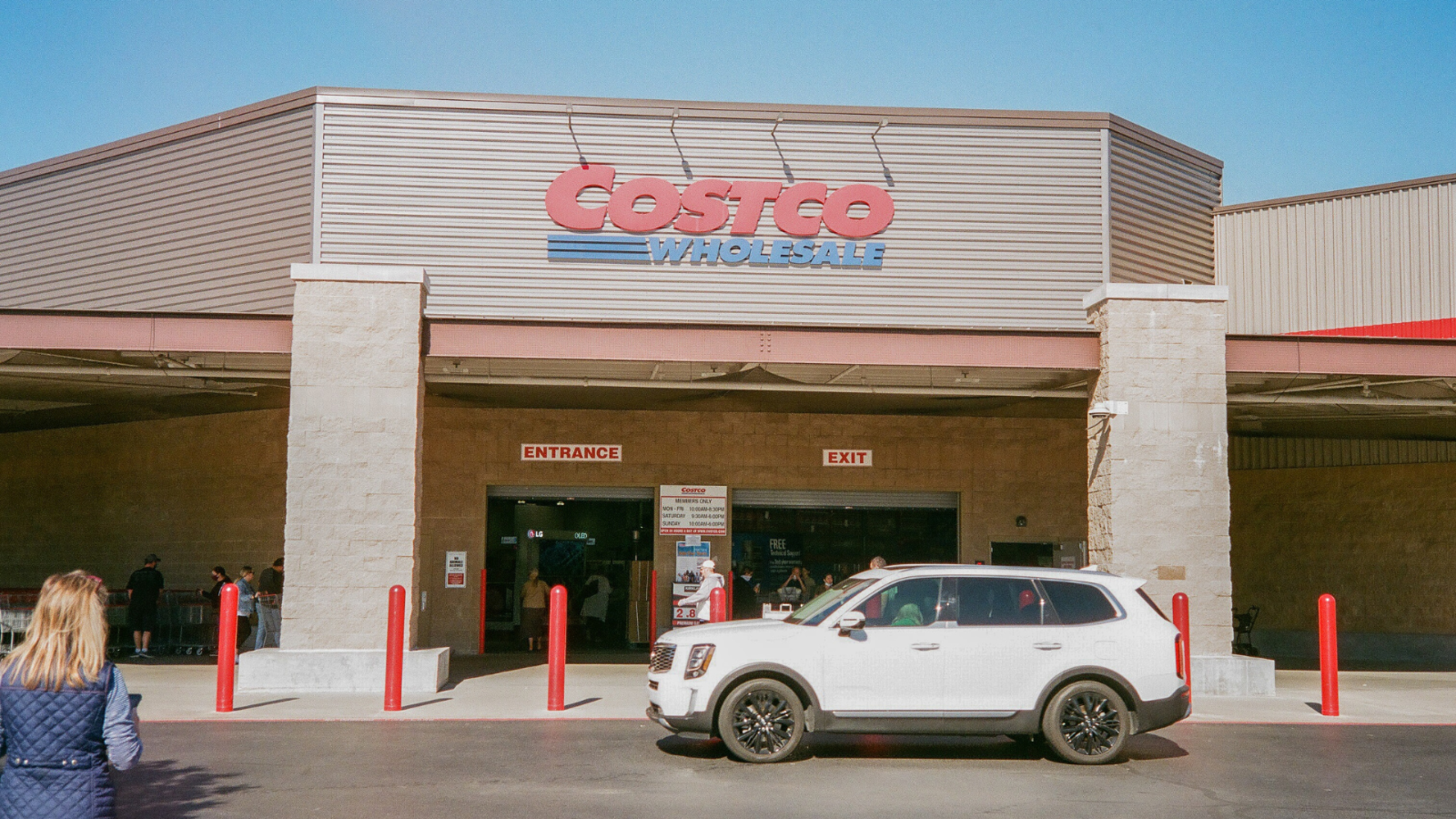
Do you shop at Costco? Then you know the thrill of saving money. But you might be missing other smart ways to stretch your dollars. Check out our list of genius money hacks—almost as good as that $1.50 hot dog!
Learn More
efind - Brain food is delivered daily. Every day, we analyze thousands of articles and send you only the best, tailored to your interests. Loved by 510,562 curious minds. Subscribe.

TOP MARKET NEWS
Top Market News - June 4, 2026
Ceasefire Talks and Geopolitical Tensions Shape Market Sentiment
CNBC analyzes how ceasefire developments and broader geopolitical tensions are influencing inflation concerns, affordability, and global risk sentiment.
Tip: Geopolitical risk can quickly shift energy prices and equity volatility across global markets.
JPMorgan CEO Jamie Dimon’s Market Message for 2026
The Street highlights key insights from Jamie Dimon’s outlook on markets, focusing on risks, interest rates, and long-term economic resilience.
Tip: Large institutional commentary often signals how major capital allocators view upcoming risk cycles.
Will the Stock Market Crash? Key Risk Factors Explained
U.S. News breaks down potential risk factors including valuations, interest rates, and macroeconomic stress that could impact market stability.
Tip: Understanding downside risks is just as important as tracking upside momentum in equity markets.
Why Long-Term Stock Market Returns May Exceed Expectations
The Motley Fool discusses arguments for continued strong long-term equity returns driven by innovation, productivity, and corporate earnings growth.
Tip: Long-term investing success often depends more on time in the market than timing the market.
Advertise with Investing Wise Academy
Elevate your financial brand with targeted exposure to savvy investors and market enthusiasts. Join us early for premium discounts and a compelling story that lands in the right inboxes. Let’s grow together!
Partner with UsPROMO CONTENT
Can email newsletters make money?
As the world becomes increasingly digital, this question will be on the minds of millions seeking new income streams in 2026.
The answer is—Absolutely!

That’s it for this episode!
Thank you for taking the time to read today’s email! Your support is what allows me to send out this newsletter for free every day.
What do you think of the new format? Please provide your feedback in the poll below, and if you find the newsletter valuable, feel free to share it with other investors!
How would you rate today's newsletter?
Disclaimer: This newsletter is for informational purposes only and should not be considered financial advice. Please consult with a financial advisor before making any investment decisions.