In partnership with


Generating reliable income in retirement is about more than simply finding investments with the highest yields. Every portfolio decision involves balancing cash flow, risk, diversification, and long-term sustainability. While an 8%+ yield may sound like the perfect solution for replacing a paycheck, investors need to understand how that income is generated and what sacrifices may come with it. The strongest retirement portfolios aren't built solely on maximizing distributions—they're built on strategies that can continue supporting income through changing market conditions and economic cycles.
Apple’s Starlink Update Sparks Huge Earning Opportunity

Apple just secretly added Starlink satellite support to iPhones through iOS 18.3.
One of the biggest potential winners? Mode Mobile.
Mode’s EarnPhone already reaches 490M+ users that have earned over $1B, and that’s before global satellite coverage. With SpaceX eliminating "dead zones," Mode's earning technology can now reach billions more in unbanked and rural populations worldwide.
Their global expansion is perfectly timed, and investors like you still have a chance to invest in their pre-IPO offering at $0.52/share.
With their recent 32,481% revenue growth and newly reserved Nasdaq ticker, Mode is one step closer to a potential IPO.
Please read the offering circular and related risks at invest.modemobile.com. This is a paid advertisement for Mode Mobile’s Regulation A+ Offering.
Mode Mobile recently received their ticker reservation with Nasdaq ($MODE), indicating an intent to IPO in the next 24 months. An intent to IPO is no guarantee that an actual IPO will occur.
The Deloitte rankings are based on submitted applications and public company database research, with winners selected based on their fiscal-year revenue growth percentage over a three-year period.

This newsletter explores a four-ETF retirement income portfolio featuring $SCHD ( ▲ 0.38% ), $JAAA ( ▲ 0.08% ), $JEPQ ( ▲ 0.81% ), and $SPYI ( ▲ 0.74% ), and examines whether raising a portfolio's yield from 7% to more than 8% is truly worth the added risk. We'll break down how each fund contributes to income, uncover the hidden overlap many investors overlook, explain why option-income ETFs generate such high distributions, and discuss the trade-offs between maximizing cash flow today and preserving long-term portfolio growth. If you're planning for retirement or building passive income, this comparison offers valuable insights before chasing the next high-yield opportunity.
Let’s embark on this transformative journey together and position your portfolio for success in this evolving market landscape!
Be sure to read through to the end to catch all the valuable insights this newsletter delivers to your inbox today.
How daily 'stock bets' hit 87% of the time
Imagine walking into a casino KNOWING you'd win 87% of the time.
That's exactly what my “stock betting” system does.
And unlike the house edge at casinos (which is only 1-15%)...
We're crushing it with stock bets that can pay off in MINUTES:
• $790 pure profit
• 185% gains
• $1,500 winners
And we do this almost every single day from 3-4 PM Eastern!
Want to place these stock bets with us? First week's FREE
Click here to see how we do it.
Building Steadily Over Time: $500 Monthly Investments in ETN
Consider adding $500 to $ETN ( ▲ 3.96% ) stock every month and following the path it has taken over the past five years. The chart shows a consistent climb — the price moved from around $158 five years ago to $404.07 today. That adds up to a 156% total gain, averaging about 21% growth each year.
If the next five years deliver similar results, your dollar-cost averaging plan could create solid progress. You would invest a total of $30,000 over 60 months. Based on that historical rate, your holdings could reach approximately $47,000 to $52,000 by the end.
This approach of buying regularly helps you stay invested through both quieter stretches and more active periods, capturing the overall upward movement without needing to predict short-term changes. The stock recently traded near its 52-week high of $436.74, showing it has maintained strength while still experiencing normal fluctuations.

The strength of this method lies in its simplicity and consistency. You keep contributing the same amount each month, allowing time and growth to work in your favor. Past performance offers a useful guide, though markets can always shift. For those seeking a practical way to grow savings over the longer term, ETN has demonstrated reliable progress that could reward patient investors who stay with the plan.
💰📈 The Retirement Income Balancing Act: Chasing an 8% Yield Without Losing Sight of the Risks
Retirement investing often sounds simple on paper.
Save enough money, withdraw a percentage every year, and let the portfolio do the rest.
But real life rarely follows a neat formula. Markets don't care when retirement begins. Some years they soar. Others begin with steep declines. And if income depends on selling investments during those downturns, the timing alone can permanently reduce the size of a portfolio.
That's why income-focused investing continues to attract attention.
The appeal is easy to understand. Instead of depending on selling shares every year, the goal is to generate enough cash flow through dividends, interest, and option income to help cover living expenses while leaving the underlying investments intact.
Recently, one retirement portfolio aimed to push that idea even further—raising its target income yield from 7% to 8.32% using just four exchange-traded funds (ETFs): Schwab U.S. Dividend Equity ETF (SCHD), Janus Henderson AAA CLO ETF (JAAA), JPMorgan Nasdaq Equity Premium Income ETF (JEPQ), and NEOS S&P 500 High Income ETF (SPYI).
At first glance, the higher yield looks incredibly attractive.
But once the numbers are examined closely, it becomes clear that the extra income comes with meaningful trade-offs that every retirement investor should fully understand.
Income Isn't Free—Every Extra Dollar Has a Cost
One of the biggest misconceptions surrounding high-yield portfolios is that finding a higher yield automatically means finding a better investment.
That isn't how portfolio construction works.
Generating more income usually requires accepting additional risks somewhere else.
In this case, increasing the portfolio yield from roughly 7% to 8.32% wasn't achieved by discovering new "hidden gem" funds.
Instead, it came from changing the portfolio allocation.
The safer, lower-yielding funds received smaller allocations, while the higher-yielding funds carried much more of the workload.
That distinction matters because portfolio weighting often has a greater impact than the individual investments themselves.
The yield increased—but so did concentration risk.
SCHD Remains the Foundation, Even If It Doesn't Generate Most of the Income
The first building block remains SCHD, one of the most widely respected dividend ETFs available today.
Despite criticism following its 2025 performance, SCHD's long-term characteristics haven't changed.
The fund continues focusing on profitable, established companies with consistent dividend histories, including major holdings such as:
Merck
Home Depot
UnitedHealth Group
Amgen
Abbott Laboratories
Procter & Gamble
Coca-Cola
PepsiCo
Verizon
Texas Instruments
These aren't companies built around explosive growth.
They're businesses designed to generate reliable cash flow through multiple economic cycles.
That conservative approach became unpopular during periods when technology stocks dominated market performance.
Healthcare, consumer defensive companies, and energy represented much larger portions of SCHD than technology, causing the fund to trail many of its peers during the AI-driven rally.
Yet the following year demonstrated exactly why long-term investors continue holding it.
SCHD rebounded strongly, outperforming much of its category without changing its investment philosophy.
The lesson is simple.
Sometimes the market rewards excitement.
Other times, it rewards discipline.
SCHD isn't designed to win every year.
It's designed to remain dependable across many years.
JAAA Adds Stability That Stocks Can't Always Provide
The second piece of the portfolio is JAAA, a fund that receives far less attention than it probably deserves.
Unlike traditional bond funds, JAAA invests primarily in the highest-rated portions of collateralized loan obligations (CLOs)—specifically the AAA-rated tranches.
Those securities sit at the top of the repayment structure.
If underlying loans experience problems, lower-rated portions absorb losses first before the highest-rated layers are affected.
Another important feature is that these loans generally carry floating interest rates.
That means rising interest rates don't hurt them in the same way they often hurt traditional bonds.
Its behavior during the difficult 2022 bond market illustrates this advantage.
While many bond funds experienced meaningful declines, JAAA managed to produce a positive return, demonstrating why many income investors use it as a stabilizing component rather than a return maximizer.
It won't usually lead performance during bull markets.
That's not its job.
Its purpose is providing consistency when many other income assets struggle.
JEPQ Delivers Income by Giving Up Some Future Growth
The portfolio becomes much more aggressive with JEPQ.
Unlike SCHD, JEPQ generates a significant portion of its distributions through a covered call strategy.
The fund owns many of the Nasdaq's largest technology companies while simultaneously selling call options against those holdings to collect option premiums.
Those premiums become monthly income for investors.
The trade-off is unavoidable.
Selling covered calls limits some future upside.
If markets rally sharply, investors collect the income—but surrender part of the capital appreciation.
That's exactly how the strategy is supposed to work.
JEPQ's largest holdings include many of today's AI leaders:
NVIDIA
Apple
Micron Technology
Alphabet
Microsoft
AMD
Amazon
Lam Research
Tesla
Meta Platforms
Technology accounts for more than half of the portfolio, making JEPQ much more growth-oriented than many retirees might initially assume.
For investors seeking dependable monthly income, that concentration deserves careful consideration.
What Replaces Roundup?

The next agricultural transition may not be bigger tractors. It may be autonomous robots replacing herbicides entirely. Greenfield Robotics is building commercial systems designed for that future.
Greenfield Robotics is Testing The Waters under tier 2 of Regulation A. No money or other consideration is being solicited, and if sent in response will not be accepted. No offer to buy the securities can be accepted and no part of the purchase price can be received until the offering statement filed by the company with the SEC has been qualified by the SEC. Any such offer may be withdrawn or revoked, without obligation or commitment of any kind, at any time before notice of acceptance given after the date of qualification. An indication of interest involves no obligation or commitment of any kind. “Reserving” shares is simply an indication of interest. There is no binding commitment for investors that reserve shares in this manner to ultimately invest and purchase the shares reserved of the company, or to purchase any shares of the company whatsoever.
SPYI Pushes Portfolio Income Even Higher
The final income engine is SPYI.
Like JEPQ, SPYI relies heavily on option-writing strategies rather than traditional dividend payments.
It owns stocks from the S&P 500 while generating additional income through covered calls.
One important detail often overlooked involves the difference between distribution yield and SEC yield.
SPYI's headline distribution yield appears exceptionally high.
However, much of that distribution comes from option premiums rather than dividends paid by the underlying companies.
That doesn't automatically make the income unsafe.
It simply means investors are relying on market volatility and option income—not solely on corporate dividend growth—to maintain distributions.
The distinction becomes especially important during prolonged periods of low market volatility when option premiums naturally decline.
Understanding where income actually comes from matters just as much as the size of the income itself.
The Hidden Overlap Many Investors Miss
One of the more surprising discoveries inside this portfolio isn't the yield.
It's the overlap.
JEPQ and SPYI appear to be different funds with different managers.
Yet many of their largest positions are nearly identical.
Both hold major positions in:
NVIDIA
Apple
Microsoft
Amazon
Alphabet
Meta Platforms
Tesla
Micron Technology
That means nearly 60% of the retirement portfolio ends up invested in two funds that own many of the same technology leaders.
The strategies differ because each fund writes options differently.
The underlying companies, however, remain remarkably similar.
As a result, technology becomes one of the portfolio's largest exposures—even though many investors may initially believe they're building a broadly diversified retirement income strategy.
Diversification isn't just about owning multiple ETFs.
It's about understanding what those ETFs actually own.
Who Really Pays the Retirement Income?
Perhaps the most eye-opening part of the portfolio isn't its yield.
It's where the income actually comes from.
Although SCHD serves as the portfolio's anchor, its relatively modest dividend yield means it contributes only a small portion of the total retirement paycheck.
Meanwhile, JEPQ and SPYI—the two option-income funds—generate the overwhelming majority of monthly cash flow.
Together, they produce nearly 80% of the portfolio's total income.
SCHD, despite being viewed as the safest long-term holding, contributes only a small fraction of the overall distributions.
That doesn't make SCHD less valuable.
Quite the opposite.
Its role isn't maximizing income.
Its role is providing stability, quality, and long-term dividend growth while the higher-yield funds do much of the heavy lifting.
Understanding those roles helps set realistic expectations during different market environments.
Is the Extra Yield Worth It?
An evenly balanced allocation across all four funds would still produce an attractive yield while reducing concentration risk.
Pushing the portfolio above 8% requires heavier allocations toward the higher-yield option-income funds.
That creates more dependence on option premiums, greater technology exposure, and additional concentration within similar mega-cap stocks.
Some retirees may gladly accept that trade-off because immediate cash flow matters more than maximizing long-term capital appreciation.
Others—particularly investors still several years away from retirement—may decide preserving future growth is more important than squeezing out one additional percentage point of income today.
Neither approach is universally right.
The key is understanding what is being exchanged.
Higher income doesn't magically appear.
It is purchased by accepting different risks.
Knowing exactly what those risks are allows better decisions than simply chasing the highest yield on a fund's marketing page.
For investors building toward retirement rather than living off it today, patience may remain one of the most valuable assets of all.
Tip: High-yield portfolios deserve more attention than simply comparing distribution percentages. Look at how each fund generates its income, how much overlap exists between holdings, what sectors dominate the portfolio, and whether the strategy aligns with your stage of retirement. A higher yield can certainly improve cash flow—but understanding the trade-offs behind that income is what ultimately helps build a retirement portfolio that can last for decades.
Ready to Revolutionize Your Wealth?
Here's what's waiting for you:
📈 Step-by-Step Guide: Start Investing in Minutes with Our Chosen Online Broker
🔍 Expert Insights: Uncover the Strategies Behind Our Recommended Smart Portfolios
💼 Easy Diversification: Gain Exposure to a Wide Range of Assets with Just a Few Clicks
💰 Long-Term Growth Potential: Build a Portfolio for Consistent Returns Over Time.

💸 Paying the bills
What if your money could drive itself to your goals?
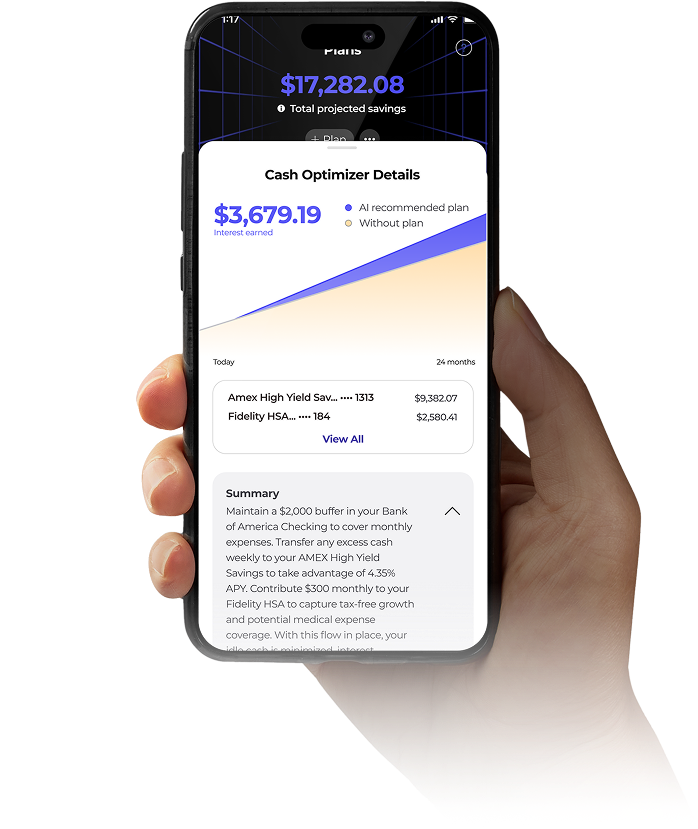
Any bank, any account, Piere makes it possible. In seconds, Piere analyzes your spending, income, wants, and goals, then creates fully automated plans for your money to follow.
- Save money automatically when you get paid — your money moves itself to the right account at the right interest rate
- Repay debt and stay debt free - Piere smartly determines which accounts to pay and when for the biggest impact
- Spend smarter — Piere keeps only the money you need for monthly expenses in your checking, moving the rest to high-yield accounts for safekeeping (and less temptation)
Get started in just seconds, and if you don't grow by at least $120 in your first year, we’ll give you back the difference.
Learn More
Refind - Brain food is delivered daily. Every day, we analyze thousands of articles and send you only the best, tailored to your interests. Loved by 510,562 curious minds. Subscribe.

TOP MARKET NEWS
Top Market News - July 30, 2026
Can Stocks Continue Climbing as Treasury Yields Rise?
Investors are evaluating whether higher U.S. Treasury yields could pressure equity valuations, while assessing if strong corporate earnings and economic growth can continue supporting the broader market.
Analysts Outline a Potential Stock Market Risk Scenario
Market strategists are examining how rising oil prices, heavy AI-related capital spending, and shifting investor sentiment could combine to create downside risks for equities.
Investors Prepare for a Week Focused on the Fed and Corporate Cash
The week ahead places the spotlight on Federal Reserve developments, major earnings reports, and corporate cash generation as investors search for clues about the market's next direction.
Five Key Market Stories Before Wall Street Opens
Traders are tracking the day's biggest market-moving events, including earnings, economic reports, and company news, as they prepare for another active trading session.
Advertise with Investing Wise Academy
Elevate your financial brand with targeted exposure to savvy investors and market enthusiasts.
Partner with Us
PROMO CONTENT
Can email newsletters make money?
As the world becomes increasingly digital, this question will be on the minds of millions seeking new income streams in 2026.
The answer is—Absolutely!

That’s it for this episode!
Thank you for taking the time to read today’s email! Your support is what allows me to send out this newsletter for free every day.
What do you think of the new format? Please provide your feedback in the poll below, and if you find the newsletter valuable, feel free to share it with other investors!
How would you rate today's newsletter?
Disclaimer: This newsletter is for informational purposes only and should not be considered financial advice. Please consult with a financial advisor before making any investment decisions.