In partnership with


Markets rarely move in a straight line. Just months into 2026, investors are already navigating rising volatility, shifting AI infrastructure headlines, and growing macro uncertainty. While many focus on short-term market swings, something more important is happening beneath the surface: a handful of companies continue strengthening their fundamentals even as their stock prices fluctuate. From the AI dominance of NVIDIA to the expanding digital ecosystem of MercadoLibre and the fast-growing communities on Reddit, several businesses are quietly positioning themselves for the next phase of growth.
Keep reading to discover the five companies building powerful long-term momentum, why temporary volatility may be hiding opportunity, and how sectors like AI, fintech, and cybersecurity could shape the next chapter of market growth.

Let’s embark on this transformative journey together and position your portfolio for success in this evolving market landscape!
Be sure to read through to the end to catch all the valuable insights this newsletter delivers to your inbox today.
Looking For Stable Retirement Income Without Guesswork?

If you want dependable income and less market stress, annuities can be a strong fit. Leverage Planning helps you compare rates and features across 30+ established insurers, with guidance from licensed annuity advisors who are not tied to one carrier.
• Side By Side Comparisons
• Competitive Rates And Clear Tradeoffs
• Support From Quote To Purchase
Minimum investment: $50,000
Check Rates Now
Fueling Growth with VDE: Energy Sector Upside and Your Steady $500 Monthly Approach
Picture this: Five years ago, the Vanguard Energy ETF $VDE ( ▼ 1.02% ) traded around $74–$75 per share. Today, it closes at $159.62—that's a strong +114% increase. The chart shows a solid recovery and climb, with energy prices and sector demand driving the gains after some earlier volatility.
The 52-week high stands at $163.30, close to current levels and signaling the ETF has been testing fresh highs lately.
Breaking it down simply: The compound annual growth rate (CAGR) based on this price move is about 16.5%. That's the average yearly lift—worked out from the ending value over the starting value raised to 1/5 minus 1. In plain terms, if this pattern holds, it means consistent yearly progress that compounds nicely over time.
Now imagine starting with dollar-cost averaging (DCA): putting $500 in every month for the next five years, no matter the daily price. This adds up to $30,000 total from your pocket over 60 months. You buy more shares when prices ease and fewer when they rise, which helps smooth your average cost.
Close more deals, fast.

When your deal pipeline actually works, nothing slips through the cracks. HubSpot Smart CRM uses AI to track every stage automatically, so you always know where to focus.
Simplify your pipeline with:
Instant visibility into bottlenecks before they cost you revenue
Clear dashboards highlighting deals in need of the most attention
Automatic tracking so your team never misses a follow-up
Start free today. No credit card required.

If VDE keeps a similar historical pace around that 16.5% annual growth, your monthly contributions grow for the time remaining. By the end of five years, your investment could build to about $44,700. That gives a gain of roughly $14,700 beyond what you put in—a healthy 49% overall return from straightforward, regular investing.
Past performance doesn't guarantee future results—energy markets can swing with oil prices, supply changes, or global events. But VDE tracks a broad mix of energy companies, offering exposure to the sector without picking individual stocks. Your $500 monthly plan stays easy to stick with, letting compounding handle the growth quietly.
Energy needs keep evolving with both traditional and transition trends. Staying consistent through any dips often turns steady saving into meaningful long-term results.
Ready to power your plan forward?
📈🔎Opportunity in the Noise: 5 Stocks Quietly Building the Next Chapter of Growth
The market rarely waits for anyone to feel comfortable.
Two months into 2026, volatility has already returned to the headlines. Market sentiment has been pulled in different directions: macro uncertainty, artificial intelligence infrastructure spending questions, and a noticeable spike in the CBOE Volatility Index. Historically, when the VIX climbs toward elevated levels—especially near the high-20s or around 30—it signals anxiety in the market. Yet historically, those moments often coincide with short-term bottoms or recovery periods shortly afterward.
That does not guarantee a rebound. Markets never promise certainty.
But history tends to reward those who recognize the difference between panic and opportunity.
Late in the week, the market was also digesting several headlines surrounding AI infrastructure expansion plans. Reports surfaced suggesting Oracle Corporation $ORCL ( ▼ 2.78% ) and OpenAI $OPENAI ( 0.0% ) might pause expansion of a major Texas data-center project. At the same time, other discussions hinted that Meta Platforms $META ( ▼ 6.98% ) could step in to lease the same site, while NVIDIA $NVDA ( ▼ 4.4% ) was reportedly helping facilitate the discussions.
The takeaway here is not the rumor cycle. It is the broader trend.
Artificial intelligence infrastructure is not slowing—it is simply evolving.
Companies will continue to compete for computing power, data storage, and AI capabilities. What changes is who builds it and how fast they deploy it. That is why volatility around AI-related stocks often reflects short-term uncertainty rather than long-term decline.
Meanwhile, software stocks have quietly started recovering from earlier pullbacks. Several names across cybersecurity and enterprise software posted strong gains during recent weeks. That shift hints at a broader truth investors sometimes overlook:
Markets rarely move all at once. Rotations happen beneath the surface.
While headlines focus on declines, certain companies are quietly strengthening their long-term positions.
For investors juggling careers, responsibilities, and limited time to analyze hundreds of stocks, the real question is simpler:
Which companies remain strong even when their stock prices temporarily are not?
Five companies stand out today—not because they are flawless, but because their fundamentals suggest that current prices may not fully reflect their long-term trajectory.
The AI Giant Quietly Growing Into Its Valuation
Few companies represent the artificial intelligence boom more clearly than $NVDA ( ▼ 4.4% ).
For several years, the company has been the backbone of the AI revolution, providing the graphics processing units that power advanced machine learning systems, large language models, and hyperscale data centers.
Yet interestingly, the stock itself has not moved dramatically over the past six months.
During that time, something important happened.
The business continued growing into its valuation.
Even after a massive multi-year run, NVIDIA still maintains extraordinary financial performance:
Gross profit margins around 71%
Operating margins above 60%
Net profit margins exceeding 55%
More than $100 billion in operating cash flow over the past year
These numbers are not typical for a company of NVIDIA’s size. They are closer to what smaller high-growth companies achieve, not a technology giant already worth trillions.
Still, skepticism persists.
Many investors worry that large technology companies—those building massive AI infrastructure—might eventually slow their capital expenditures. If spending slows, demand for NVIDIA chips could decelerate as well.
That concern is valid.
But even if revenue growth slows from its recent pace of roughly 60–70% annually, a slowdown does not mean stagnation. Even 30–35% growth for a company of NVIDIA’s scale would remain extraordinary.
Analysts currently project that by fiscal year 2029, the company could generate more than $540 billion in revenue.
That possibility reframes the conversation.
Instead of asking whether NVIDIA will continue growing at explosive rates forever, the more practical question becomes:
How much growth is already priced into the stock today?
Relative to historical valuation levels, NVIDIA’s forward price-to-earnings ratio currently sits below its long-term average. That suggests the market may already be factoring in a moderation of growth.
For long-term investors who believe artificial intelligence will remain a defining technology trend of the decade, periods of consolidation often become the moments when positions are built—not when headlines are loudest.
Sometimes the most important investment decision is simply recognizing that a great company can grow without its stock price doing much for a while.
The Latin American Powerhouse Still Expanding
While artificial intelligence dominates headlines, another company has been quietly building one of the most powerful digital ecosystems outside the United States.
That company is MercadoLibre $MELI ( ▼ 1.61% ).
Often compared to a hybrid of Amazon, PayPal, and Shopify for Latin America, MercadoLibre operates a massive ecosystem that combines:
E-commerce marketplaces
Digital payments
Logistics networks
Consumer financial services
Over the past several years, the company has demonstrated remarkable consistency. Revenue has grown more than 30% year-over-year for 28 consecutive quarters, an achievement very few global companies can match.
What makes this growth even more compelling is the region where it occurs.
Latin America presents unique economic cycles, currency fluctuations, and political challenges. Yet MercadoLibre has repeatedly emerged stronger after each downturn, expanding its infrastructure and improving its competitive position.
Recent financial results show the company entering another investment phase. Margins have temporarily compressed because management is investing heavily in logistics, shipping capacity, and infrastructure.
Short-term investors often react negatively to margin compression.
Long-term investors usually see something else: strategic reinvestment.
These investments are already producing measurable results.
Over the past several years:
Gross merchandise volume has grown nearly 30% annually
Total items sold on the platform have accelerated dramatically
Commerce revenue has increased more than 1,100% over six years
Fintech revenue has grown at nearly the same pace
One of the most significant indicators of platform strength is transaction activity. The number of items sold on MercadoLibre has surged from modest post-pandemic growth to nearly 36% annual expansion in 2025.
Much of this growth stems from deliberate strategies such as reduced shipping costs, expanded free-delivery programs, and broader product availability.
These tactics reduce short-term profitability—but they deepen the platform’s network effects.
For investors willing to think beyond quarterly fluctuations, MercadoLibre represents a long-term compounder operating in one of the world’s most underpenetrated digital commerce markets.
And sometimes, the best companies are the ones that keep building quietly while most investors are distracted elsewhere.
Your Boss Will Think You’re an Ecom Genius

Optimizing for growth? Go-to-Millions is Ari Murray’s ecommerce newsletter packed with proven tactics, creative that converts, and real operator insights—from product strategy to paid media. No mushy strategy. Just what’s working. Subscribe free for weekly ideas that drive revenue.
The Internet’s Conversation Engine
Few companies illustrate the unpredictability of public markets better than Reddit $RDDT ( ▼ 1.97% ).
The platform went public in 2024. Since then, its stock has experienced multiple dramatic swings—surging during periods of optimism and falling sharply when sentiment shifts.
In 2026, the stock has declined more than 40% year-to-date.
On the surface, this drop might appear alarming. But a closer look at the underlying business tells a different story.
Reddit’s platform continues to grow rapidly:
Over 470 million global weekly active users
User growth exceeding 24% year-over-year
Gross profit margins above 90%
Free cash flow margins exceeding 30%
Unlike traditional social media platforms, Reddit’s value lies in its community structure. Thousands of specialized forums—known as subreddits—bring together users with highly specific interests.
That structure creates unique opportunities for advertisers.
Instead of broad demographic targeting, brands can advertise directly inside communities already discussing relevant topics. A company selling mechanical keyboards, for example, can advertise inside a subreddit dedicated entirely to keyboard enthusiasts.
This type of contextual targeting can dramatically improve advertising effectiveness.
Another potential revenue stream lies in Reddit’s massive archive of human conversations. As artificial intelligence models continue training on large datasets, platforms rich in authentic user discussions become valuable sources of information.
Licensing structured data for AI training could eventually become a meaningful business segment.
Looking ahead, analysts project that Reddit could grow revenue from roughly $2.2 billion in 2025 to more than $5 billion by 2028.
If those projections hold true, the recent stock decline may reflect sentiment shifts rather than deteriorating fundamentals.
For patient investors, those are often the moments worth paying attention to.
Two Undervalued Growth Stories in Finance and Cybersecurity
The final two companies operate in very different industries—but both illustrate how short-term market reactions can diverge from long-term growth trajectories.
The first is SoFi Technologies $SOFI ( ▼ 0.87% ), a rapidly expanding financial services platform.
SoFi has evolved far beyond its original student loan business. Today the company offers a comprehensive ecosystem that includes:
Digital banking
Personal loans
Investing platforms
Credit cards
Financial planning tools
Despite strong execution, the stock has fallen more than 30% in 2026.
Yet the company’s operational performance remains strong. Current projections indicate:
Revenue growth around 30% annually
Earnings per share growth approaching 60%
Continued expansion of its member base and financial product ecosystem
Management has built a reputation for consistently beating guidance and raising expectations throughout the year. If that trend continues, the current valuation may underestimate the company’s long-term potential.
Meanwhile, cybersecurity continues to emerge as one of the most critical technology sectors globally. Rising geopolitical tensions, increasing digital infrastructure, and escalating cyber threats have created sustained demand for security platforms.
One company benefiting from this trend is Rubrik $RBRK ( ▲ 0.31% ).
Rubrik focuses on data security, ransomware protection, and cloud data management—areas growing rapidly as organizations move more operations online.
Since its 2024 public listing, Rubrik has delivered strong revenue growth, including a recent quarterly increase of more than 48% year-over-year.
Subscription revenue—measured through annual recurring revenue—continues to expand steadily, while the company has recently begun generating positive free cash flow.
The cybersecurity industry rarely slows down during economic downturns because digital protection is no longer optional.
Businesses must secure their systems regardless of market conditions.
For investors evaluating long-term trends rather than daily headlines, this sector may remain one of the most resilient technology segments of the decade.
Volatility rarely feels comfortable.
But markets often present their most compelling opportunities during periods when uncertainty dominates the narrative.
For investors balancing careers, responsibilities, and limited time, the goal is not to chase every market move. It is to recognize strong businesses when temporary fear pushes prices below long-term potential.
Whether it is artificial intelligence infrastructure, global e-commerce expansion, digital communities, fintech innovation, or cybersecurity protection, these five companies illustrate a broader truth:
Great businesses do not stop growing simply because the market becomes nervous.
Sometimes the hardest decision is simply choosing to look past the noise.
Ready to Revolutionize Your Wealth?
Here's what's waiting for you:
📈 Step-by-Step Guide: Start Investing in Minutes with Our Chosen Online Broker
🔍 Expert Insights: Uncover the Strategies Behind Our Recommended Smart Portfolios
💼 Easy Diversification: Gain Exposure to a Wide Range of Assets with Just a Few Clicks
💰 Long-Term Growth Potential: Build a Portfolio for Consistent Returns Over Time.

💸 Paying the bills
What if your money could drive itself to your goals?
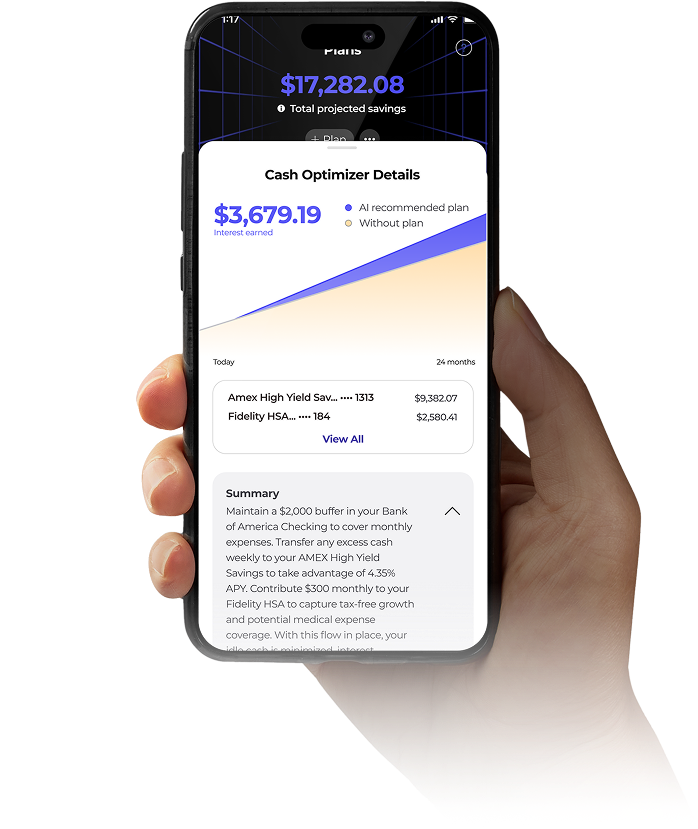
Any bank, any account, Piere makes it possible. In seconds, Piere analyzes your spending, income, wants, and goals, then creates fully automated plans for your money to follow.
- Save money automatically when you get paid — your money moves itself to the right account at the right interest rate
- Repay debt and stay debt free - Piere smartly determines which accounts to pay and when for the biggest impact
- Spend smarter — Piere keeps only the money you need for monthly expenses in your checking, moving the rest to high-yield accounts for safekeeping (and less temptation)
Get started in just seconds, and if you don't grow by at least $120 in your first year, we’ll give you back the difference.
Learn More
Refind - Brain food is delivered daily. Every day, we analyze thousands of articles and send you only the best, tailored to your interests. Loved by 510,562 curious minds. Subscribe.

TOP MARKET NEWS
Top Market News - March 9, 2026
Are Thematic ETFs Counter to Long-Term Investing?
Money Management explores whether thematic ETFs align with long-term investment strategies or encourage short-term speculation around trending sectors.
Tip: Evaluate whether thematic investing fits your long-term portfolio goals and risk tolerance.
Gold ETF Holdings and Flows – March 2026
The World Gold Council provides the latest data on global gold ETF holdings and investor flows, offering insight into market sentiment toward the precious metal.
Tip: Gold ETFs can serve as a hedge against volatility and inflation in diversified portfolios.
Is the Vanguard S&P 500 ETF (VOO) the Smartest Investment Today?
Nasdaq highlights why the Vanguard S&P 500 ETF remains one of the most popular choices for investors seeking low-cost exposure to the U.S. stock market.
Tip: Broad market ETFs can offer simple, cost-effective diversification for long-term investors.
Best-Performing ETFs for UK Investors
Morningstar reviews ETFs that have delivered strong recent performance for UK investors across sectors and global markets.
Tip: Comparing ETF performance across regions can uncover diversification opportunities beyond domestic markets.
Advertise with Investing Wise Academy
Elevate your financial brand with targeted exposure to savvy investors and market enthusiasts. Join us early for premium discounts and a compelling story that lands in the right inboxes. Let’s grow together!
Partner with UsPROMO CONTENT
Can email newsletters make money?
As the world becomes increasingly digital, this question will be on the minds of millions seeking new income streams in 2026.
The answer is—Absolutely!

That’s it for this episode!
Thank you for taking the time to read today’s email! Your support is what allows me to send out this newsletter for free every day.
What do you think of the new format? Please provide your feedback in the poll below, and if you find the newsletter valuable, feel free to share it with other investors!
How would you rate today's newsletter?
Disclaimer: This newsletter is for informational purposes only and should not be considered financial advice. Please consult with a financial advisor before making any investment decisions.