Sponsored by


Market declines often create the illusion that great companies have suddenly become weaker. In reality, many of the world's strongest businesses periodically trade at discounts driven by short-term fears, shifting narratives, or temporary uncertainty rather than deteriorating fundamentals. As investors react to headlines surrounding AI spending, capital expenditures, and slowing momentum, the bigger question becomes whether the businesses themselves have actually changed—or whether the market is simply repricing emotion.
His Father Got Parkinson's. He Built Robots Instead.

Clint Brauer grew up on his family's Kansas farm. His dad sprayed the same chemicals every American farmer sprays. Years later: Parkinson's. Clint walked away from a tech career to build a different way. Today his company, Greenfield Robotics, runs a patented fleet of autonomous bots that slice weeds with centimeter precision, day or night, herbicide-free.
Greenfield is now opening shares to everyday investors under Reg A+. Reserve during Test the Waters and you lock in a 5% bonus that can grow to 20% the week the round goes live. The US has 250 million acres at stake.
Greenfield Robotics is Testing The Waters under tier 2 of Regulation A. No money or other consideration is being solicited, and if sent in response will not be accepted. No offer to buy the securities can be accepted and no part of the purchase price can be received until the offering statement filed by the company with the SEC has been qualified by the SEC. Any such offer may be withdrawn or revoked, without obligation or commitment of any kind, at any time before notice of acceptance given after the date of qualification. An indication of interest involves no obligation or commitment of any kind. “Reserving” shares is simply an indication of interest. There is no binding commitment for investors that reserve shares in this manner to ultimately invest and purchase the shares reserved of the company, or to purchase any shares of the company whatsoever.

This breakdown explores why temporary weakness in companies like Amazon, Microsoft, Alphabet, Meta, Broadcom, and Palantir may represent opportunity rather than permanent decline. By separating price action from business fundamentals, we examine how market sentiment often diverges from long-term value—and why patient investors may benefit when exceptional companies temporarily fall out of favor.
Let’s embark on this transformative journey together and position your portfolio for success in this evolving market landscape!
Be sure to read through to the end to catch all the valuable insights this newsletter delivers to your inbox today.
Americans Born Between 1941-1979 Can Receive These 10 Benefits This Month

Your 50s+ are a great time to build wealth. Beyond basics like bulk shopping and retirement accounts, here are some fresh ways to grow your money you might’ve missed.
Learn More
PWR's Impressive Infrastructure Surge: Construction Leadership and Your $500 Monthly Plan
Picture this: Five years ago, Quanta Services $PWR ( ▲ 0.63% ) stock traded around $89 per share. Today in June 2026, it closes at $687.87 — an extraordinary +668% gain. The chart shows a steady build followed by sharp upward acceleration in recent years, driven by strong demand for power grid, data center, and renewable energy projects. The 52-week high reached $788.75, showing the stock has already climbed higher during strong phases.
Keeping it simple: The compound annual growth rate (CAGR) over these five years is about 50%. If this pace continues, it means powerful yearly gains that compound dramatically over time.
Now imagine using dollar-cost averaging (DCA): adding $500 every month for the next five years. This totals $30,000 invested from your pocket over 60 months. You buy more shares on dips and fewer on rises, which helps keep your average cost balanced. If PWR follows a similar historical pace around 50% annual growth, your monthly $500 contributions could grow your investment to approximately $105,000 by the end of five years.

That means a gain of roughly $75,000 beyond what you put in — a solid 250% overall return from consistent investing. Past performance doesn't guarantee the future — project delays, labor costs, or economic shifts can change the path. But PWR is a leader in critical infrastructure work with strong tailwinds from data centers and energy transition. Your $500 monthly plan stays simple and easy to maintain, giving compounding plenty of room to deliver big results.
The massive need for power grid upgrades and technology infrastructure keeps creating opportunities in this sector. Staying disciplined through any temporary pullbacks is what usually leads to impressive long-term growth.
Ready to build with this kind of momentum?
📉🏆 When the Market Gets It Wrong: Finding Opportunity in Overlooked Giants
There is a certain kind of market day that tests even the most patient investor. Headlines turn negative, familiar names fall several percentage points in a single session, and suddenly companies that looked unstoppable only weeks earlier are being questioned from every direction.
For many investors, those moments trigger uncertainty. Should positions be reduced? Has the story changed? Is it time to look elsewhere?
But if investing has taught anything over the decades, it is this: price and value do not always move together.
Some of the strongest businesses in the world periodically trade at prices that reflect short-term fear rather than long-term fundamentals. The challenge is recognizing whether the market is correctly identifying a permanent problem—or simply reacting to temporary concerns.
Today's environment feels remarkably similar.
Several household names are experiencing meaningful pullbacks despite continuing to generate enormous revenues, expanding profit margins, and investing aggressively in future growth. While daily price movements suggest weakness, their businesses continue moving forward.
That distinction matters.
Instead of asking, "Why is the stock falling?" a better question may be:
"Has the business actually become weaker?"
For several companies, the answer appears to be no.
When Headlines Become Louder Than Fundamentals
One of the biggest challenges for busy investors is separating market noise from business reality.
Every week brings another headline capable of moving billions of dollars in market value. An executive leaves. An analyst lowers a price target. Artificial intelligence spending increases. Capital expenditures reach record highs.
Competition intensifies.
Each headline creates immediate reactions, yet many have little impact on the long-term earnings power of the companies involved.
Recent trading activity illustrates this perfectly.
Several technology leaders—including Alphabet (Google), Amazon, Microsoft, Meta Platforms, Broadcom, and Palantir Technologies—experienced notable declines despite maintaining strong competitive positions within their respective industries.
Some investors interpreted these pullbacks as warning signs.
Others viewed them as opportunities.
The difference lies in understanding what actually drives shareholder value over the next decade rather than over the next trading week.
Strong companies rarely become weak overnight.
Likewise, temporary market pessimism rarely erases years of competitive advantages, technological leadership, or disciplined execution.
Amazon: Spending Today to Build Tomorrow
Among the companies drawing significant attention is Amazon $AMZN ( ▲ 0.51% ).
At first glance, the stock's recent weakness may appear surprising.
The company continues to expand across multiple high-growth businesses simultaneously.
Its e-commerce platform remains one of the largest retail ecosystems in the world.
Amazon Web Services (AWS) continues to power cloud infrastructure for businesses globally.
Advertising revenue has become another increasingly profitable business segment.
Artificial intelligence initiatives, logistics automation, robotics, and custom silicon development are receiving substantial investment. Yet despite these advantages, the stock has faced pressure. Much of the concern centers on one issue:
Capital expenditures.
Amazon is spending aggressively.
Large-scale investments in AI infrastructure, fulfillment centers, chips, and cloud capacity naturally reduce free cash flow in the short term. To investors focused only on quarterly numbers, those expenditures can appear excessive.
However, viewing those investments as simple costs overlooks their strategic purpose.
Throughout its history, Amazon has repeatedly sacrificed near-term profitability to build durable competitive advantages.
Its logistics network transformed retail. AWS reshaped enterprise computing. Prime strengthened customer loyalty.
Today's AI investments may represent the next chapter in that same playbook.
Rather than asking whether Amazon is spending too much, long-term investors may find it more useful to ask whether those investments are strengthening the company's competitive position five years from now.
Current evidence suggests they are.
Scale your customer experience across all channels

ElevenAgents handles high volumes of customer interactions across voice, chat, and WhatsApp, resolving customer requests faster with human-sounding agents. Train agents on your SOPs, improve CSAT in real time, and integrate with your existing tools. Higher resolution rates, no added headcount. Flat pricing at $0.08 per minute.
AWS Remains a Critical Growth Engine
While discussions often focus on Amazon's retail business, AWS continues to be one of the company's most valuable assets.
Demand for cloud computing remains strong as businesses continue migrating workloads and integrating artificial intelligence into everyday operations.
AI applications require enormous computing power.
That demand benefits cloud providers capable of delivering scalable infrastructure.
AWS is positioned at the center of that trend.
Beyond cloud services, Amazon is also developing proprietary AI chips designed to improve performance while lowering infrastructure costs.
As enterprise AI adoption expands, these investments could strengthen Amazon's ecosystem while supporting future margin expansion.
For investors looking beyond quarterly volatility, today's elevated spending may eventually translate into stronger earnings power rather than weaker financial performance.
That possibility helps explain why many long-term investors continue accumulating shares during periods of market weakness instead of avoiding them.
A Different Way to Think About Market Declines
Busy investors often feel pressured to react every time markets move sharply.
Yet reacting isn't always the same as making progress.
Sometimes the greatest advantage comes from slowing down long enough to distinguish between a falling stock price and a deteriorating business.
Those two things are not always connected.
Markets frequently price uncertainty immediately.
Businesses reveal their true strength much more slowly.
That difference creates opportunities—but only for investors willing to focus on fundamentals rather than daily headlines.
As this year's market continues rewarding certain sectors while punishing others, patience may become one of the most valuable investment strategies available.
The companies attracting the most skepticism today could become tomorrow's leaders once market sentiment begins catching up with business performance.
And history has shown that such shifts often happen long before the headlines turn optimistic.
Ready to Revolutionize Your Wealth?
Here's what's waiting for you:
📈 Step-by-Step Guide: Start Investing in Minutes with Our Chosen Online Broker
🔍 Expert Insights: Uncover the Strategies Behind Our Recommended Smart Portfolios
💼 Easy Diversification: Gain Exposure to a Wide Range of Assets with Just a Few Clicks
💰 Long-Term Growth Potential: Build a Portfolio for Consistent Returns Over Time.

💸 Paying the bills
What if your money could drive itself to your goals?
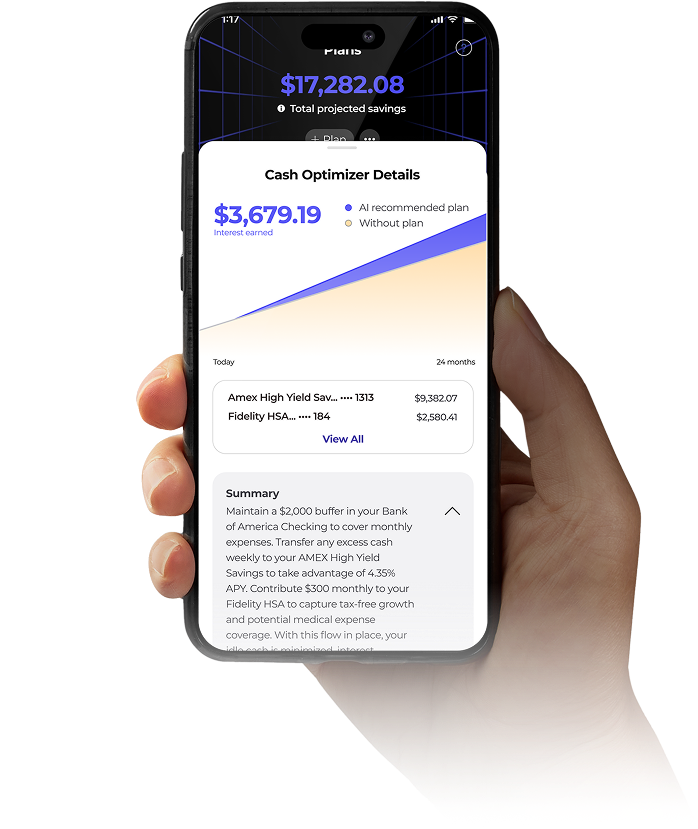
Any bank, any account, Piere makes it possible. In seconds, Piere analyzes your spending, income, wants, and goals, then creates fully automated plans for your money to follow.
- Save money automatically when you get paid — your money moves itself to the right account at the right interest rate
- Repay debt and stay debt free - Piere smartly determines which accounts to pay and when for the biggest impact
- Spend smarter — Piere keeps only the money you need for monthly expenses in your checking, moving the rest to high-yield accounts for safekeeping (and less temptation)
Get started in just seconds, and if you don't grow by at least $120 in your first year, we’ll give you back the difference.
Learn More
efind - Brain food is delivered daily. Every day, we analyze thousands of articles and send you only the best, tailored to your interests. Loved by 510,562 curious minds. Subscribe.

TOP MARKET NEWS
Top Market News - July 1, 2026
ASX Shares and ETFs Positioned for Early Retirement Goals
Investors pursuing financial independence are exploring a mix of ASX-listed shares and ETFs designed to support long-term wealth creation and retirement at an earlier age.
New Retirement Legislation Brings Key Planning Changes
Recent retirement legislation introduces important updates that could affect savings strategies, retirement accounts, and long-term financial planning decisions.
Wall Street Remains Optimistic Despite Rising AI Investment Costs
Analysts continue to support the AI-driven market rally, arguing that increasing investment costs do not necessarily signal an imminent market bubble.
Technology Stocks Face Another Wave of Selling Pressure
Technology shares experienced renewed weakness as investors reassessed valuations and shifted attention toward broader market risks and sector fundamentals.
Advertise with Investing Wise Academy
Elevate your financial brand with targeted exposure to savvy investors and market enthusiasts.
Partner with Us
PROMO CONTENT
Can email newsletters make money?
As the world becomes increasingly digital, this question will be on the minds of millions seeking new income streams in 2026.
The answer is—Absolutely!

That’s it for this episode!
Thank you for taking the time to read today’s email! Your support is what allows me to send out this newsletter for free every day.
What do you think of the new format? Please provide your feedback in the poll below, and if you find the newsletter valuable, feel free to share it with other investors!
How would you rate today's newsletter?
Disclaimer: This newsletter is for informational purposes only and should not be considered financial advice. Please consult with a financial advisor before making any investment decisions.